

In recent years, gua sha has evolved from a traditional Chinese wellness therapy into a globally recognized beauty and wellness tool. From facial lifting routines shared by influencers to professional spa treatments, gua sha tools are now widely accepted in international markets. As demand grows, more brands, retailers, and distributors are entering the supply chain, making gua sha wholesale manufacturing a critical topic for anyone serious about this business.
As the chief editor of guashafounder.com and the founder behind the Donoghua brand, I have spent many years working directly in jade processing, OEM manufacturing, and international gua sha sales. This article is written from a manufacturer’s perspective, aiming to help buyers, brands, and wholesalers understand what truly matters in gua sha wholesale—from materials and craftsmanship to compliance, pricing logic, and long-term supplier strategy.
- Core Keyword Explained: Gua Sha Wholesale Manufacturing
- The Global Rise of Gua Sha Wholesale Demand
- Understanding Gua Sha Materials in Wholesale Manufacturing
- The Manufacturing Process Behind High-Quality Gua Sha
- Quality Control in Gua Sha Wholesale Orders
- Customization Options in Gua Sha Wholesale Manufacturing
- Pricing Logic in Gua Sha Wholesale
- Compliance and Certification for International Markets
- Choosing the Right Gua Sha Wholesale Manufacturer
- Common Mistakes in Gua Sha Wholesale Sourcing
- The Future of Gua Sha Wholesale Manufacturing
- Conclusion: What You Should Truly Know About Gua Sha Wholesale
Core Keyword Explained: Gua Sha Wholesale Manufacturing
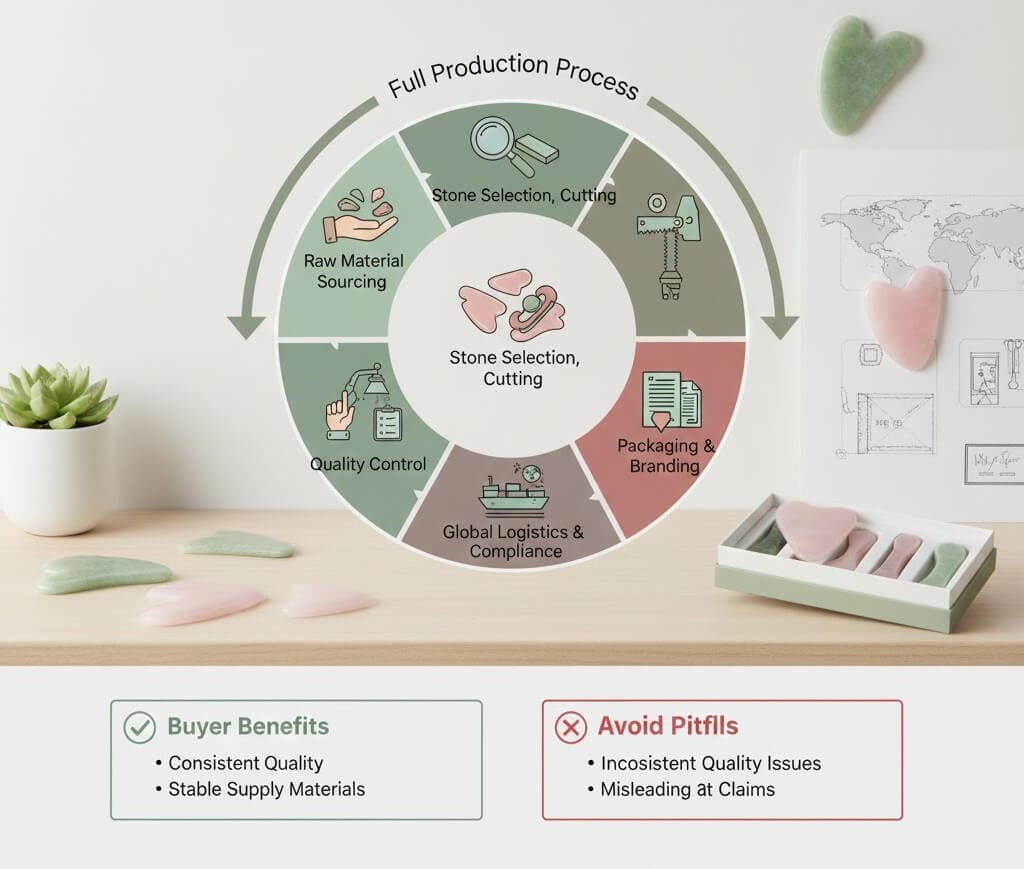
At its core, gua sha wholesale manufacturing refers to the full process of producing gua sha tools at scale for resale, branding, or distribution. This includes raw material sourcing, stone selection, cutting, shaping, polishing, quality control, packaging, and compliance with international trade regulations.
Unlike simple product reselling, wholesale manufacturing determines the final quality, durability, safety, and brand positioning of gua sha tools. For buyers, understanding this concept is essential to avoid common pitfalls such as inconsistent quality, unstable supply, or misleading material claims.
The Global Rise of Gua Sha Wholesale Demand
The Modern Popularity of Gua Sha
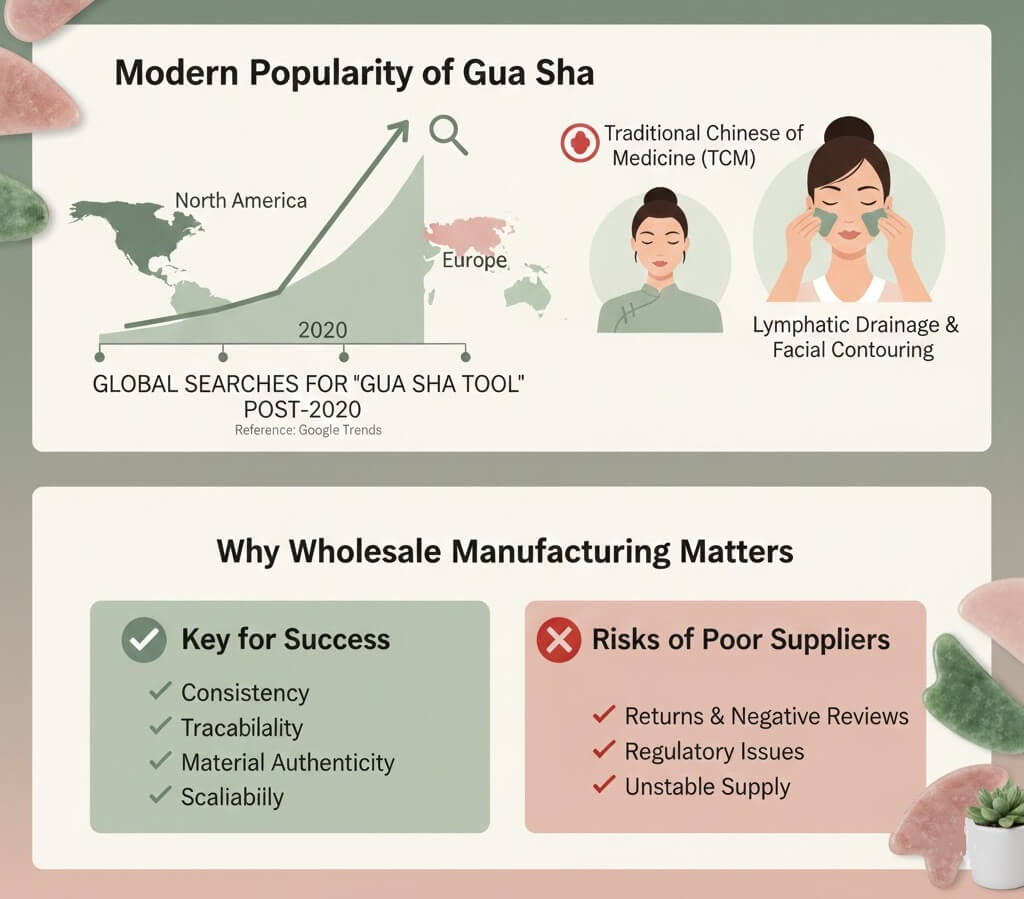
Gua sha originated in traditional Chinese medicine, where it was used to stimulate blood circulation and release muscle tension. In modern times, facial gua sha has become popular for its perceived benefits in lymphatic drainage, skin relaxation, and facial contouring.
According to Google Trends, global searches for “gua sha tool” increased sharply after 2020, especially in North America and Europe. This growth has directly fueled wholesale demand as beauty brands, spas, and e-commerce sellers seek reliable manufacturing partners.
Reference: https://trends.google.com
Why Wholesale Manufacturing Matters More Than Ever
As competition intensifies, product differentiation becomes increasingly important. Wholesale manufacturing is no longer just about low prices; it is about consistency, traceability, material authenticity, and the ability to scale without sacrificing quality. Brands that rely on unstable or inexperienced suppliers often struggle with returns, negative reviews, and regulatory issues.
Understanding Gua Sha Materials in Wholesale Manufacturing
Natural Jade vs Other Stones
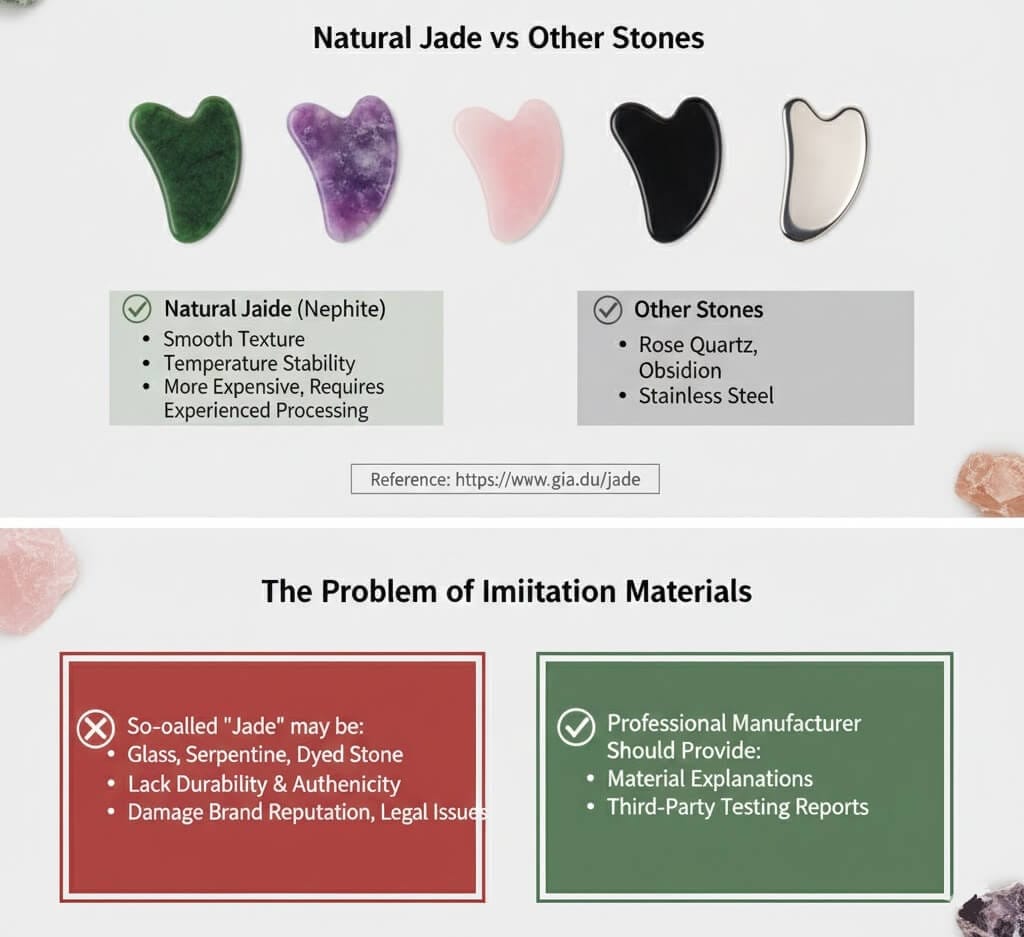
One of the most critical decisions in gua sha wholesale manufacturing is material selection. The most common materials include jade, rose quartz, amethyst, obsidian, and stainless steel. Among these, natural jade remains the most respected and widely used due to its cultural heritage and physical properties.
Natural jade, especially nephrite jade, is valued for its toughness, smooth texture, and temperature stability. However, true natural jade is more expensive and requires experienced processing to avoid fractures during cutting.
For material science reference on jade hardness and structure, you can consult:
https://www.gia.edu/jade
The Problem of Imitation Materials
In the wholesale market, many so-called “jade” gua sha tools are actually made from glass, serpentine, or dyed stone. These materials may look similar but lack durability and authenticity. For brand owners, selling imitation materials can seriously damage reputation and may lead to legal issues in certain markets.
A professional manufacturer should always be able to provide material explanations and, when required, third-party testing reports.
The Manufacturing Process Behind High-Quality Gua Sha
Raw Stone Selection
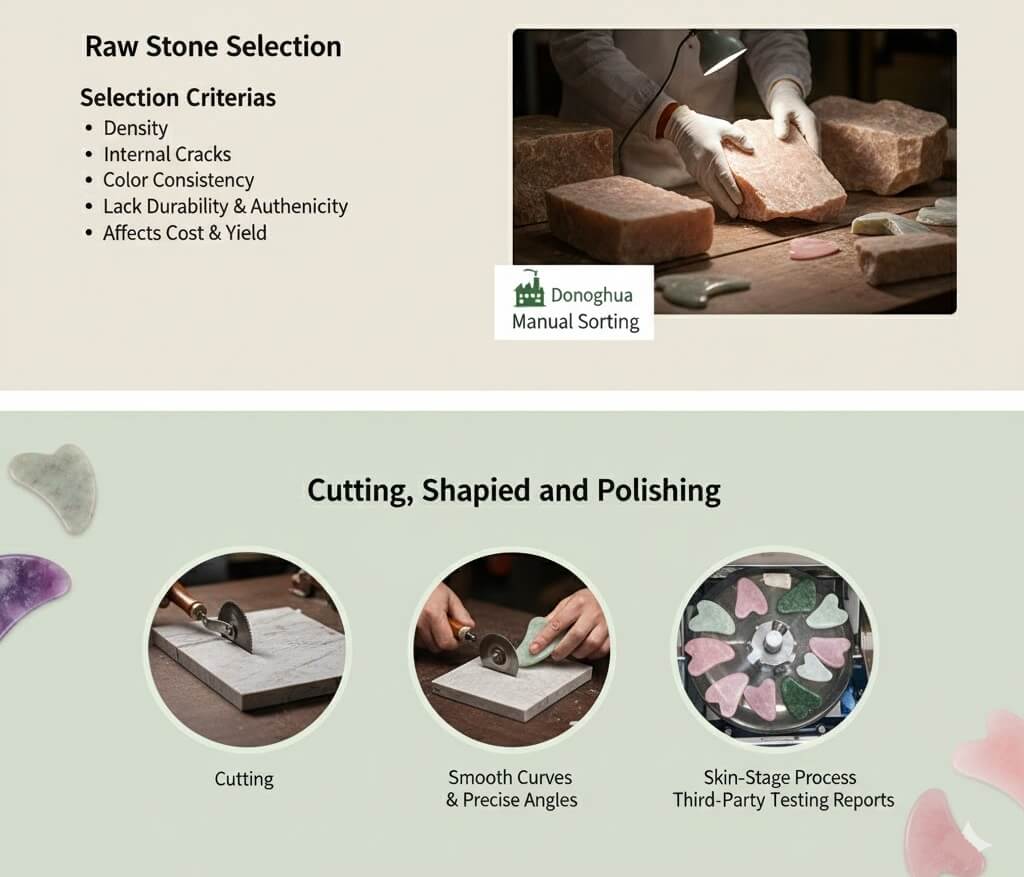
The quality of a gua sha tool begins with raw stone selection. In jade processing, stones are evaluated based on density, internal cracks, color consistency, and oil content. This step determines how much usable material can be obtained and directly affects cost and yield.
In experienced factories like Donoghua, raw materials are sorted manually before any cutting begins, reducing waste and improving consistency.
Cutting, Shaping, and Polishing
After selection, stones are cut into slabs using water-cooled diamond saws. Each slab is then shaped according to gua sha design specifications. Facial gua sha tools require smooth curves and precise angles to ensure comfort and effectiveness during use.
Polishing is a multi-stage process that can take several hours per batch. Proper polishing ensures a smooth, skin-safe surface without sharp edges. This step is often underestimated but plays a major role in user experience.
Quality Control in Gua Sha Wholesale Orders
Visual and Structural Inspection
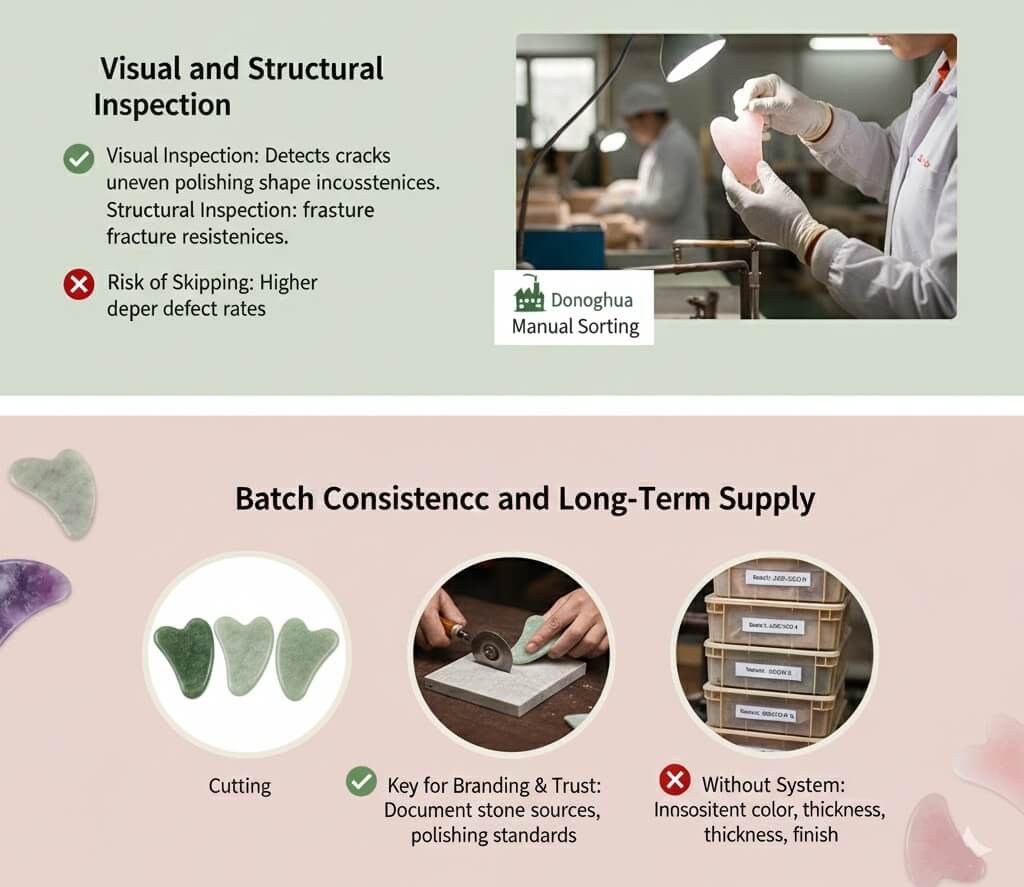
Professional manufacturers conduct multiple quality checks during production. Visual inspection identifies cracks, uneven polishing, or shape inconsistencies. Structural inspection ensures the stone will not fracture under normal pressure.
For wholesale buyers, asking about internal quality control standards is essential. A factory that skips these steps may offer lower prices but higher defect rates.
Batch Consistency and Long-Term Supply
Wholesale buyers often require repeated orders over time. Consistency across batches is critical for branding and customer trust. This is why experienced manufacturers document stone sources, processing parameters, and polishing standards.
Without this system, future orders may differ significantly in color, thickness, or finish.
Customization Options in Gua Sha Wholesale Manufacturing
Shape and Design Customization
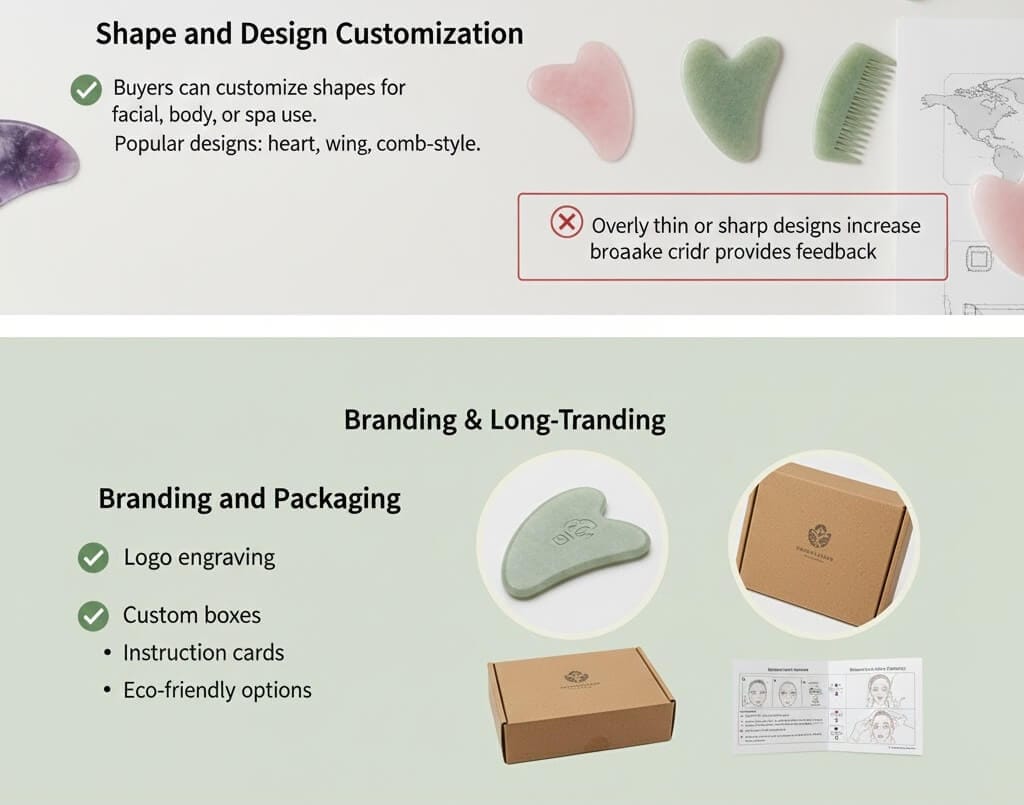
Customization is a major advantage of working directly with a manufacturer. Buyers can customize gua sha shapes to suit facial, body, or professional spa use. Popular designs include heart-shaped, wing-shaped, and comb-style gua sha tools.
Design customization requires technical understanding, as overly thin or sharp designs increase breakage risk. A responsible manufacturer will provide design feedback rather than blindly accepting all requests.
Branding and Packaging
Beyond the tool itself, packaging plays a key role in brand perception. Wholesale manufacturers often offer logo engraving, custom boxes, instruction cards, and eco-friendly packaging options.
For reference on sustainable packaging trends in beauty products, see:
https://www.mckinsey.com/industries/consumer-packaged-goods/our-insights/sustainability-in-packaging
Pricing Logic in Gua Sha Wholesale
What Determines Wholesale Price
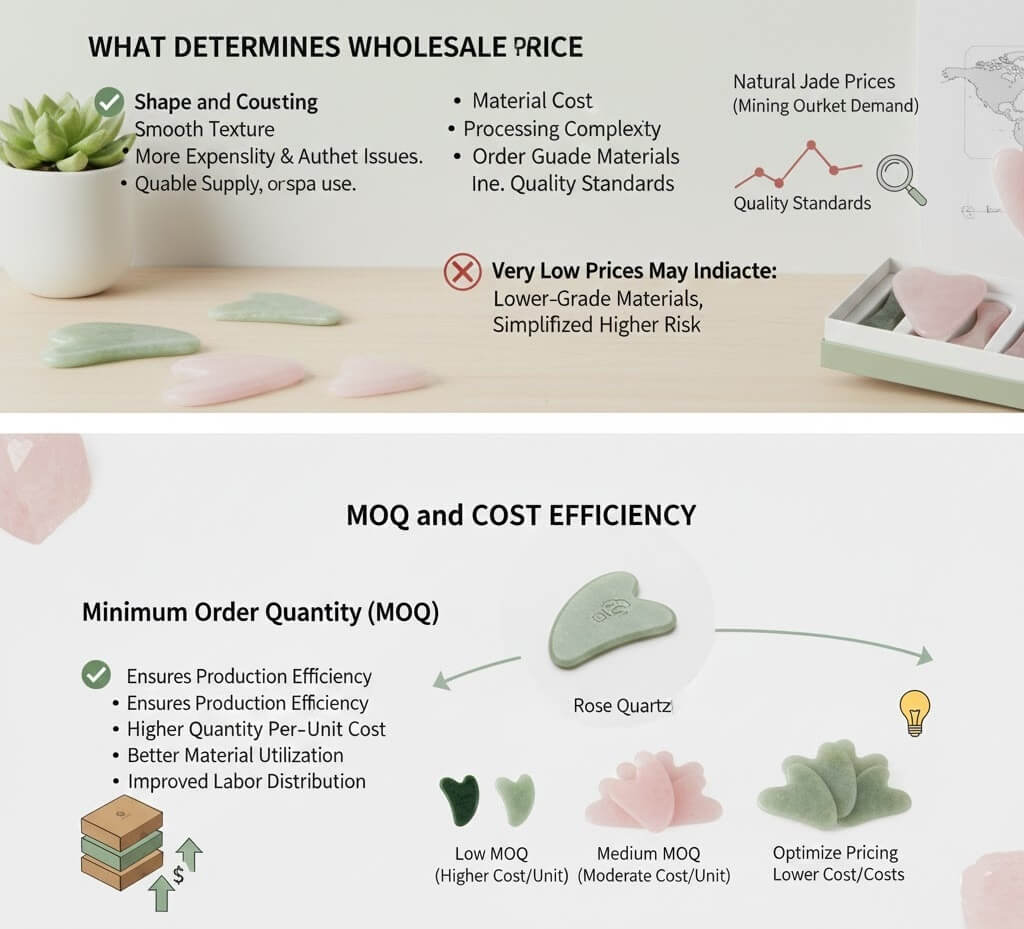
Gua sha wholesale pricing is influenced by several factors, including material cost, processing complexity, order quantity, customization level, and quality standards. Natural jade prices fluctuate depending on mining output and market demand.
Very low prices often indicate lower-grade materials or simplified processing steps. Buyers should be cautious when prices seem too good to be true.
MOQ and Cost Efficiency
Most manufacturers set a minimum order quantity (MOQ) to ensure production efficiency. Higher quantities typically reduce per-unit cost due to better material utilization and labor distribution.
Understanding MOQ structures helps buyers plan inventory and pricing strategies more effectively.
Compliance and Certification for International Markets
Regulatory Requirements
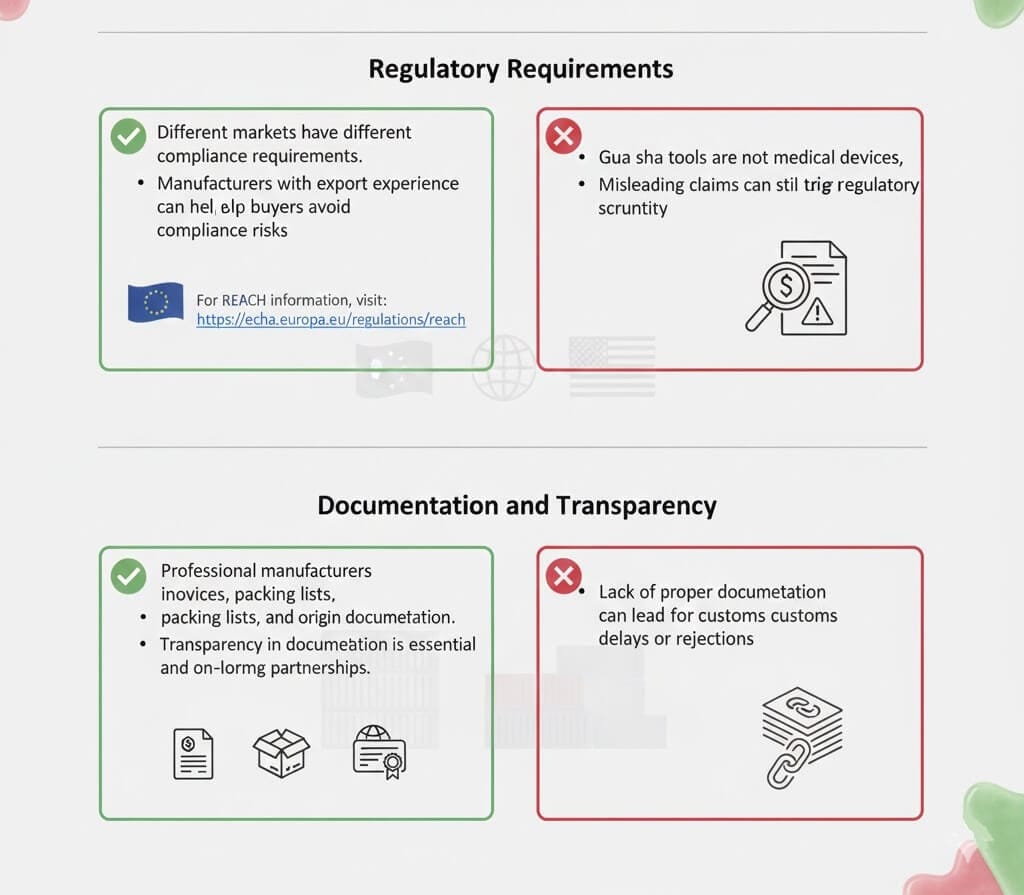
Different markets have different compliance requirements. For example, products sold in the European Union may require REACH compliance, while the U.S. market emphasizes consumer safety and accurate material descriptions.
While gua sha tools are not medical devices, misleading claims can still trigger regulatory scrutiny. Manufacturers with export experience can help buyers avoid compliance risks.
For REACH information, visit:
https://echa.europa.eu/regulations/reach
Documentation and Transparency
Professional manufacturers provide invoices, packing lists, and origin documentation. Transparency in documentation is essential for customs clearance and long-term partnerships.
Choosing the Right Gua Sha Wholesale Manufacturer
Experience and Specialization
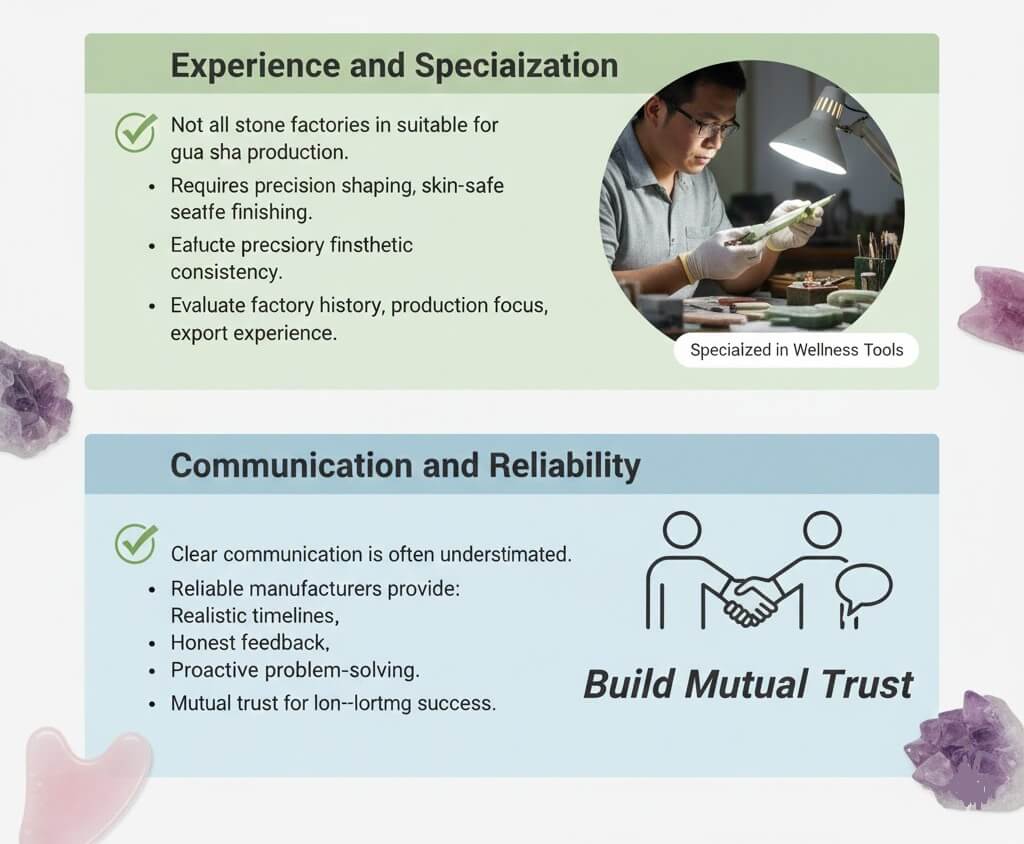
Not all stone factories are suitable for gua sha production. Gua sha requires precision shaping, skin-safe finishing, and aesthetic consistency. Manufacturers with years of experience in jade processing and wellness tools are better equipped to meet these requirements.
Buyers should evaluate factory history, production focus, and export experience before committing.
Communication and Reliability
Clear communication is often underestimated in wholesale partnerships. Reliable manufacturers provide realistic timelines, honest feedback, and proactive problem-solving. Long-term success depends not only on product quality but also on mutual trust.
Common Mistakes in Gua Sha Wholesale Sourcing
Focusing Only on Price
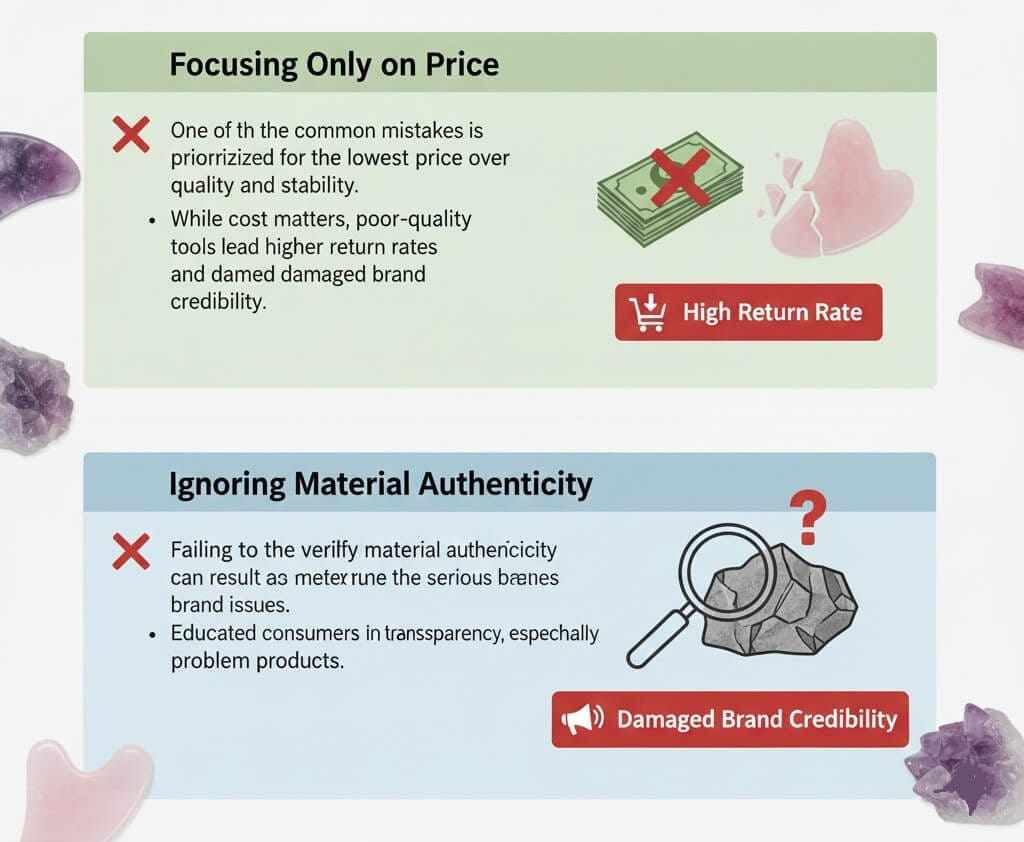
One of the most common mistakes is prioritizing the lowest price over quality and stability. While cost matters, poor-quality gua sha tools lead to higher return rates and damaged brand credibility.
Ignoring Material Authenticity
Failing to verify material authenticity can result in serious brand issues. Educated consumers increasingly demand transparency, especially in wellness and beauty products.
The Future of Gua Sha Wholesale Manufacturing
Market Trends and Innovation
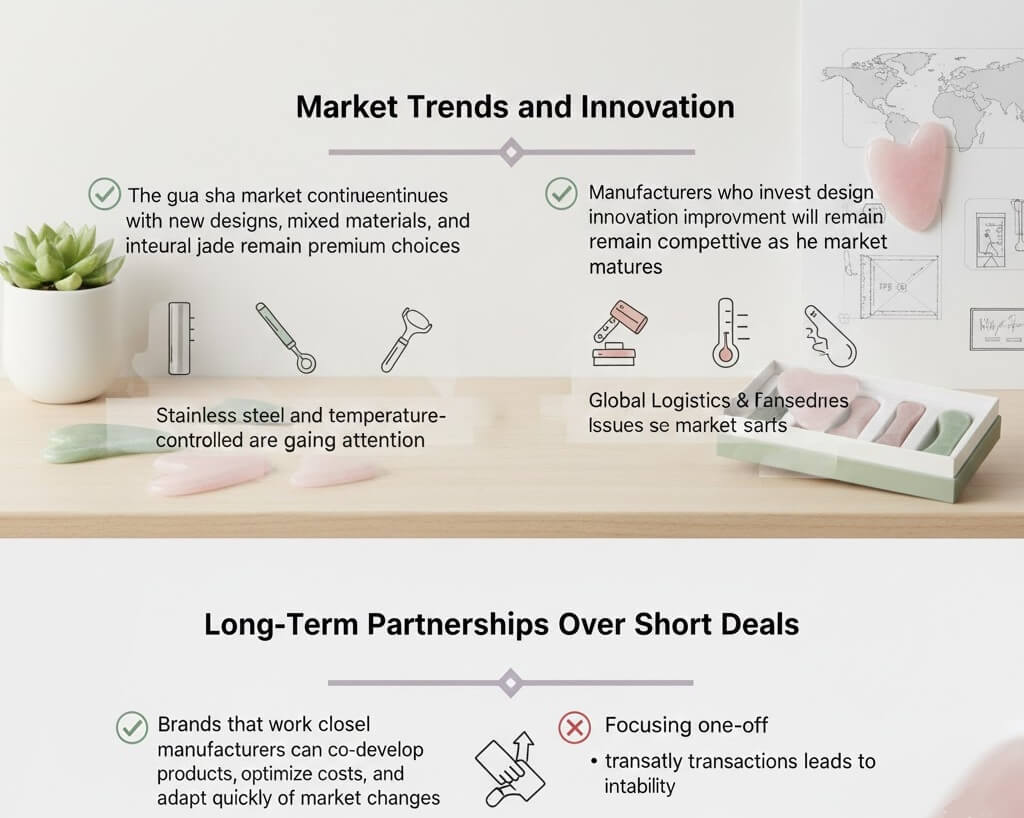
The gua sha market continues to evolve with new designs, mixed materials, and integrated wellness concepts. Stainless steel and temperature-controlled tools are gaining attention, but natural jade remains the premium choice for many brands.
Manufacturers who invest in design innovation and quality improvement will remain competitive as the market matures.
Long-Term Partnerships Over Short-Term Deals
The future of gua sha wholesale manufacturing lies in long-term partnerships rather than one-off transactions. Brands that work closely with manufacturers can co-develop products, optimize costs, and adapt quickly to market changes.
Conclusion: What You Should Truly Know About Gua Sha Wholesale
Gua sha wholesale manufacturing is far more complex than it appears on the surface. From material authenticity and craftsmanship to quality control, pricing logic, and compliance, every detail affects the final product and brand success.
For buyers, understanding these fundamentals helps avoid costly mistakes and builds a foundation for sustainable growth. For manufacturers like Donoghua, the goal is not only to supply products, but to support partners with expertise, transparency, and long-term value.
If you are serious about entering or expanding in the gua sha market, choosing the right wholesale manufacturing partner is the most important decision you will make.