
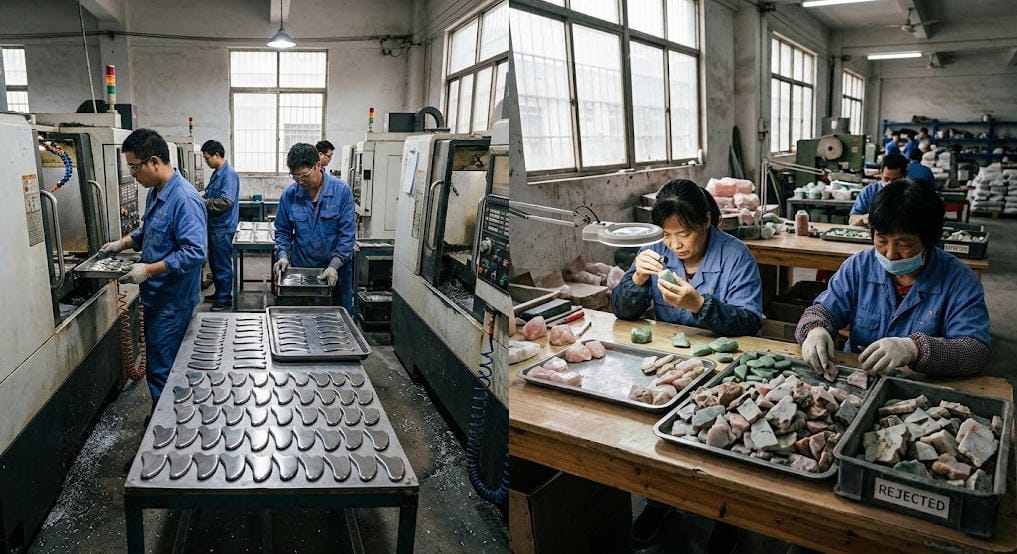
If you’ve ever put two quotes side by side — one from a stainless steel gua sha manufacturer and one from a stone gua sha manufacturer — and wondered why the price, the lead time, and the minimum order quantity look so different, the answer isn’t complicated. It comes down to a number most buyers never think to ask about: yield. A batch of 1,000 stainless steel blanks can often reach a finished-goods rate close to 980 pieces, while a comparable batch of natural quartz or jade can lose anywhere from 15% to 30% of its material before it ever reaches final polish. That yield gap, not the speed of any single machine, is what actually drives the difference you see on paper. This disclosure walks through exactly where that gap comes from, so you can read a quote from any gua sha factory with a clearer picture of what you’re really paying for.
Why a Stainless Steel Gua Sha Manufacturer Reaches Higher Effective Output
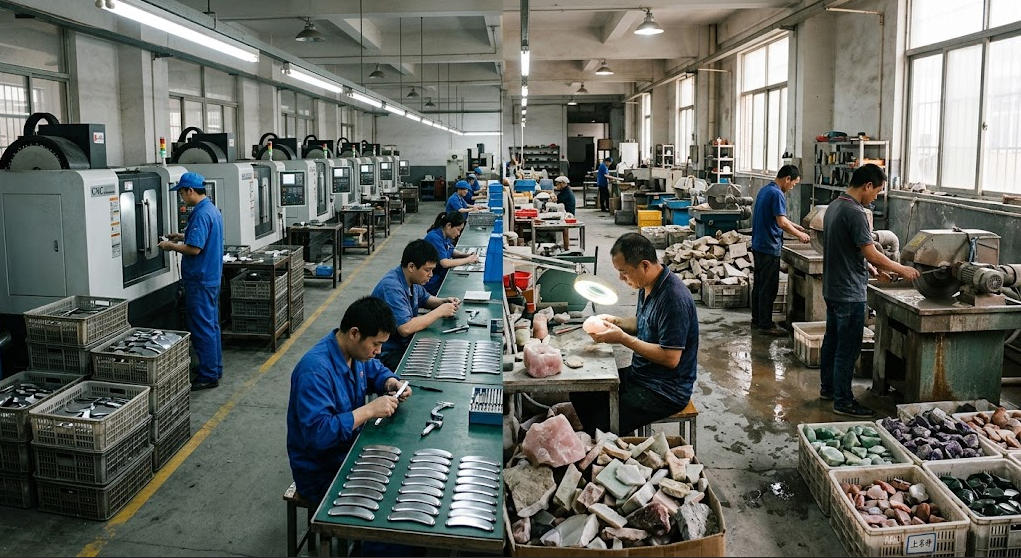
What “Effective Output” Actually Measures on the Shop Floor
You’ve probably heard a sales rep say a part “only takes five minutes to machine.” That number is almost useless on its own, and you should treat it with some suspicion. What actually determines your cost and your delivery date is how many finished, sellable pieces come out the other end of 100 hours of production time — not how fast one single piece moves through one single station. Engineers call this effective output, and it’s the only number that connects directly to your invoice. A metal-first factory can push this number up because the material itself behaves the same way every single time it enters the line. A block of natural stone does not offer that guarantee, no matter how skilled the operator running the machine is.
This means you can compare two suppliers fairly only when you ask about output per shift, not cycle time per piece. Ask a gua sha factory how many finished units left the line last week against how many raw blanks went in at the start, and you’ll learn more in thirty seconds than you would from an hour of technical specifications. Put a number on it, too: on a typical 5,000-unit order, a five-percentage-point swing in yield is the difference between delivering on the date printed on your purchase order and chasing a partial shipment three weeks later. This means asking the yield question before you sign is worth more to your timeline than negotiating another two cents off the unit price.
The 1,000-to-980 Yield Curve You’ll See From a Stainless Steel Gua Sha Manufacturer
Here’s the number worth writing down. When 316L stainless steel sheet, coil, or bar enters a production run, the thickness, hardness, and chemical composition are already fixed by the mill before the material ever reaches the factory floor. Out of 1,000 blanks stamped or CNC-cut from that stock, roughly 980 typically survive polishing and inspection to become sellable product. The remaining 20 are usually lost to minor dimensional drift or surface marking, not structural failure, because the raw material itself rarely hides a defect that only shows up halfway through machining.
Natural quartz, jade, and agate don’t offer that same starting point. A single block of rough material can carry color banding, cotton, hairline cracks, or internal stress that stays invisible until the block is sliced open. So the material has to survive pre-sorting, slicing, a second round of sorting, and defect removal before it’s even eligible to enter the same production sequence a metal blank starts from day one. Why does this matter to you? Because it means a quote from a stone gua sha manufacturer is pricing in a loss curve that starts before the first cut is even made, while a quote for steel is pricing in a loss curve that starts much closer to the finish line.
Raw Material Standardization: The First Fork Between a Stainless Steel Gua Sha Manufacturer and a Stone Gua Sha Manufacturer
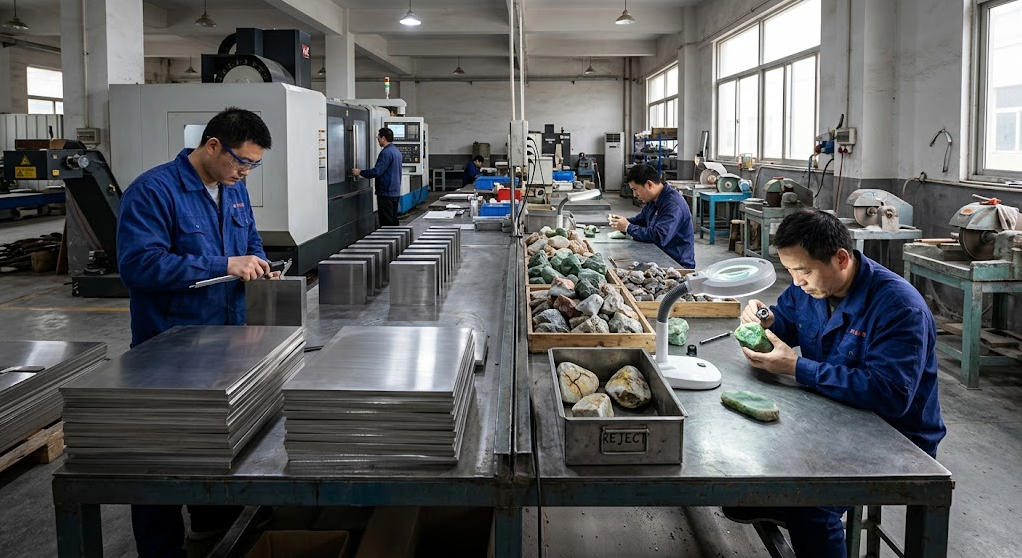
How a Stainless Steel Gua Sha Manufacturer Locks Spec Before Cutting Even Starts
Steel arrives at the factory with a mill certificate attached to it. Thickness, width, hardness, and chemical composition are documented numbers, not visual judgments, and every sheet in the batch is expected to match the last one. That single fact is what lets this type of production line move straight into a repeatable sequence — sheet in, stamp or CNC, deburr, polish, clean, inspect — without stopping to re-evaluate each individual piece of raw stock. You get the benefit of that certainty every time you reorder, because a repeat order behaves like the first order.
Natural stone doesn’t come with that kind of paperwork. Two blocks labeled “rose quartz” can come from the same quarry and still carry completely different internal structure, and that difference only becomes visible once the block is opened. This means your production planning has to build in a buffer for material variation that a metal order simply doesn’t need, and any gua sha factory worth working with should tell you that upfront rather than let you discover it in a late shipment.
Why a Jade Gua Sha Manufacturer Cannot Skip the Pre-Sort Stage
Jadeite and nephrite carry a Mohs hardness of roughly 6 to 7, according to the International Gem Society, which places them in a durability range that resists everyday scratching but still leaves them vulnerable to internal stress fractures that hardness alone doesn’t prevent. That’s a mineralogical fact, not a factory shortcoming, and it’s the reason a jade gua sha manufacturer has to run an extra sorting pass before a single stone gets anywhere near a CNC bit. Rough material gets checked for color consistency, then for visible texture, then for cracks that might only be a few millimeters long but run deep enough to fail later in the process.
Skipping that step doesn’t save time — it just moves the failure further down the line, where it costs more in labor and machine time to discover. So what does this mean for you as a buyer? It means the per-piece price you’re quoted by a jade gua sha manufacturer already includes the cost of stones that never made it past this first sorting stage, and a supplier who can explain that math to you clearly is one you can trust to hold that price on your next order.
Automation Ceiling and Yield Risk: What a Gua Sha Factory Running Natural Stone Must Disclose
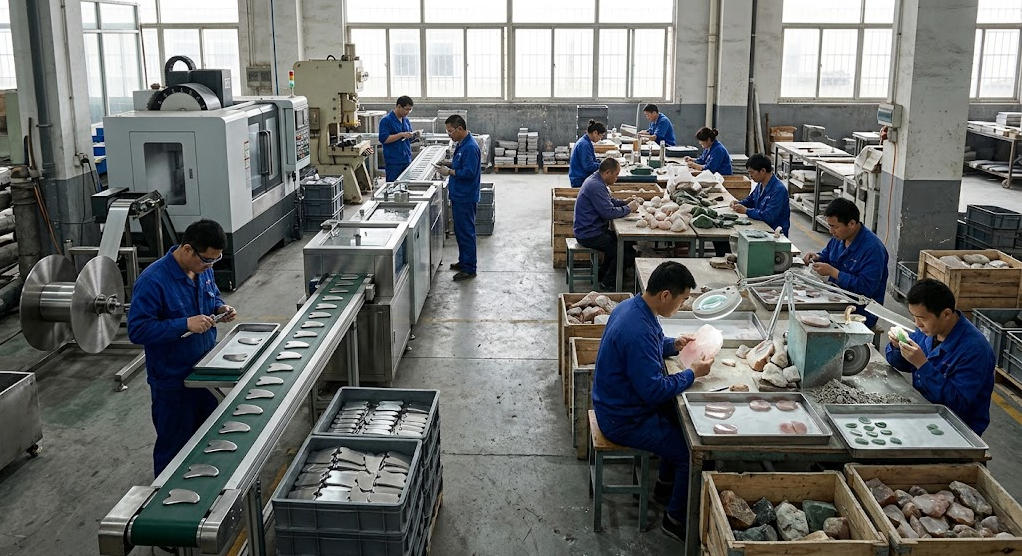
Continuous Feed on a Stainless Steel Production Floor
Metal tolerates speed. This kind of production line can run automatic feeding, stamping, deburring, surface treatment, and ultrasonic cleaning as one continuous sequence, because the material doesn’t develop internal weaknesses under vibration the way stone does. Once the parameters are dialed in, the same program runs shift after shift without needing to be re-tuned for each new batch of sheet stock. That’s what lets a production floor hit a stable, repeatable pace — the kind of pace you can actually build a delivery schedule around instead of guessing at.
There’s a compliance angle worth mentioning here too, since it usually gets left out of a sales pitch. Because the automated sequence is fixed and repeatable, this same production line can also run heavy-metal migration testing and surface-contact safety checks on a representative sample from the batch and reasonably extend that result across the full run, since every piece went through the identical process. This means your compliance paperwork for a repeat order is faster to produce and cheaper to obtain than it would be for a batch where every piece carries slightly different internal material.
Multi-Stage Loss Inside a Stone Gua Sha Manufacturer’s Process
This side of the business cannot run that same playbook, and pretending otherwise is where a lot of delivery delays actually come from. Material gets rejected at rough sorting, then again after slicing reveals a hidden crack, then again after rough grinding causes edge chipping, and once more during final polishing when a flaw finally surfaces under bright light. Each of those checkpoints removes pieces from the batch, which means the “quantity ordered” and the “quantity that survives to become inventory” are two very different numbers in stone production. A responsible gua sha factory will walk you through that funnel rather than quote you a single flat unit price and hope the loss doesn’t come up later.
Why a Quartz Guasha Manufacturer Cannot Simply Speed Up the CNC
Say a CNC program is scheduled to take five minutes per piece. For steel, you can often shorten that by raising feed rate, switching tooling, or running multiple stations at once, and the part comes out the same regardless. Try that same shortcut on natural stone and you introduce vibration and localized stress that can trigger micro-cracking or outright breakage, particularly on a gua sha board’s thin edges and curved surfaces where stress already concentrates. A quartz guasha manufacturer who runs the theoretical fastest program available is usually the one producing the highest scrap rate, not the highest output. This means the “slower” quote you receive from a careful supplier is frequently the one protecting your actual delivered quantity, even though the number on the page looks less impressive.
Appearance Grading, Surface Finishing, and What “Consistent” Really Means
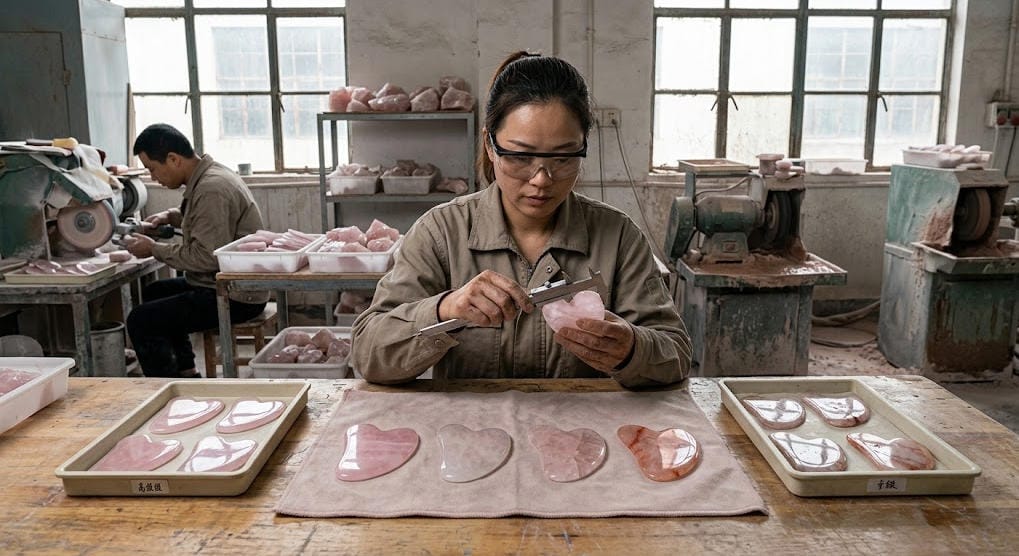
Why Two Rose Quartz Blanks Are Never the Same Product
Here’s a question worth sitting with: if two gua sha boards measure exactly the same length, width, and thickness, are they the same product? For steel, the answer is almost always yes, because dimensional tolerance is the whole story. For natural stone, dimensional tolerance is only part of the story. One rose quartz blank might carry an even, translucent tone with attractive internal banding, while another labeled with the identical material name is cloudier, carries visible cotton, and shows a more chaotic internal texture. Gemological grading organizations such as the Gemological Institute of America evaluate colored gemstones on exactly this kind of internal characteristic — inclusions and clarity — precisely because two stones sharing a mineral name can carry very different commercial value.
That means a stone gua sha manufacturer has to run color sorting, texture sorting, and a final appearance grade on top of the dimensional check that a metal part alone would need. Skipping the appearance grade doesn’t reduce cost; it just shifts a customer complaint from the factory floor to your inbox after the shipment arrives.
Think about what this means for your own product listings, too. If you sell online, your customers are matching the photo on your page against the piece that arrives in their package, and a wide swing in color or clarity across a single SKU generates return requests that have nothing to do with product quality and everything to do with mismatched expectations. This means asking your supplier how tightly they grade within a single SKU — not just within the general material category — is one of the more practical questions you can put in front of a factory before your first bulk order ships.
One Parameter Set on Steel, Six Stages on Stone
Surface finishing tells the same story. This type of factory can typically run CNC, deburring, polishing, ultrasonic cleaning, and inspection as one fixed sequence, and once that recipe is proven, it gets reused batch after batch without adjustment. Stone finishing runs closer to rough grind, medium grind, fine grind, polish, clean, inspect, and — when a flaw shows up under the buffing wheel — rework. Hardness itself doesn’t stay constant either: quartz sits around 7 to 7.5 on the Mohs scale according to the International Gem Society, while jade sits lower at roughly 6 to 7, so a polishing recipe tuned for one material batch can chip or unevenly finish the next batch even when both are technically the same gem species. So what should you take from this? A supplier quoting you a single finishing price for “any stone type” hasn’t actually accounted for this variability, and that’s usually a sign the price will move once real production starts.
Cost Disclosure: Reading a Quote From a Stainless Steel Gua Sha Manufacturer vs a Stone Gua Sha Manufacturer
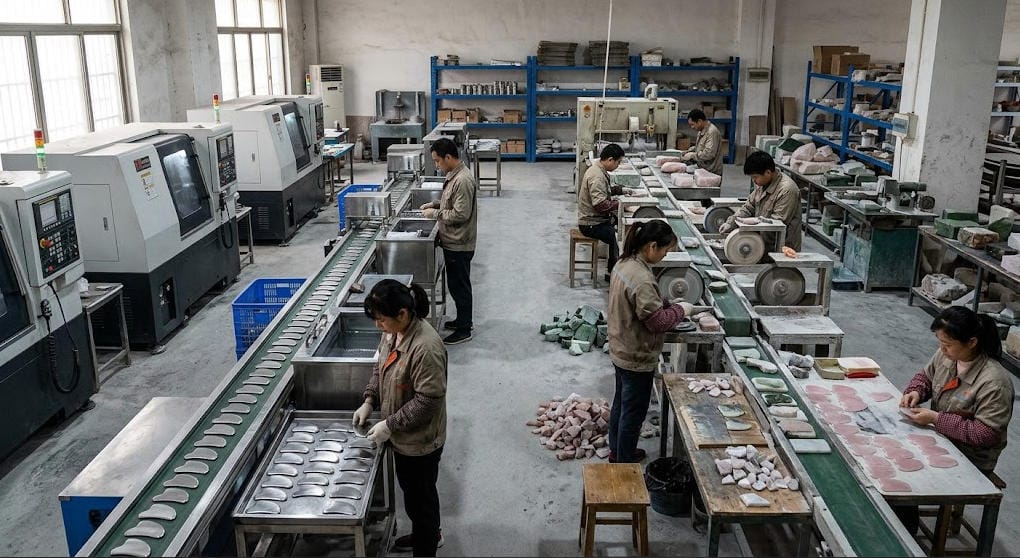
What Drives the Per-Piece Price at a Stainless Steel Gua Sha Manufacturer
When you get this kind of quote, you’re mostly paying for material cost, machine time, and a thin labor layer for inspection and packing. Because the yield sits near 98%, the loss built into that price is small and predictable, which is exactly why steel quotes tend to hold firm even across repeat orders placed months apart. If your priority is a stable per-unit cost for a large gua sha wholesale order with tight margins, this is the cost structure that gives you the least surprise on reorder.
What Drives the Per-Piece Price at a Jade Gua Sha Manufacturer or Quartz Guasha Manufacturer
A quote from a jade gua sha manufacturer or a quartz guasha manufacturer is pricing in something different: the cumulative loss from pre-sort, slicing, rough grind, fine grind, polish, and appearance grading, all layered on top of raw material that can itself vary in cost depending on origin and clarity. This is precisely why treatment and origin disclosure matters in this category — labs such as the Swiss Gemmological Institute (SSEF) exist specifically because two stones of the same name can carry very different treatment histories and, therefore, very different legitimate market value. A stone gua sha manufacturer working with untreated, properly sourced material has a real reason for a higher and less predictable per-piece price, and that reason should be explainable to you in plain terms, not waved away as “natural material, please understand.”
This means when you compare two quotes and one looks dramatically cheaper for what’s advertised as the same jade or quartz grade, the more useful question isn’t “why is this one so expensive,” it’s “what did the cheaper gua sha factory skip to hit that number.” Nine times out of ten, the answer is one of the sorting or grading stages described above, and the cost of that shortcut shows up later as inconsistent product in your own customers’ hands.
Gua Sha Wholesale Order Sizing: What Changes When You Scale From Sample to Container
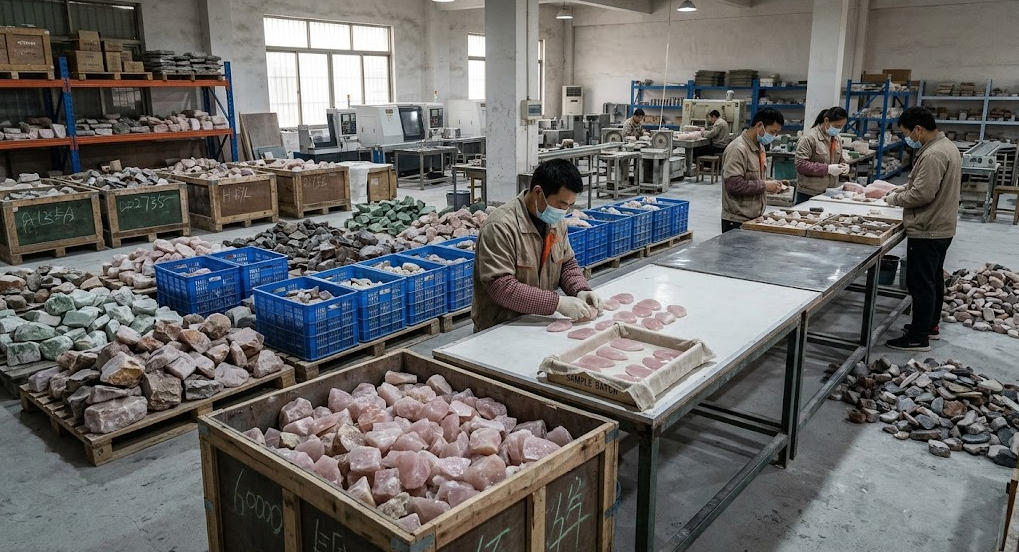
A sample order tells you almost nothing about how a supplier behaves at real volume, and that’s true on both sides of this comparison. When you move from a 200-piece sample to a 5,000-piece gua sha wholesale order, a metal-side supplier mostly just runs the same proven program for longer. The per-piece cost usually drops a little as setup time gets spread across more units, and the delivery date becomes easier to predict because the process doesn’t change shape between sample and bulk run.
Why a Jade Gua Sha Manufacturer or Quartz Guasha Manufacturer Needs a Longer Runway to Scale
Scaling a jade gua sha manufacturer‘s output doesn’t work the same way, and you should plan your ordering calendar around that difference rather than fight it. A 200-piece sample can be hand-picked from a small pool of good-looking rough material, but a 5,000-piece gua sha wholesale order needs enough raw stone entering the sorting stage to still yield 5,000 pieces after every rejection point along the way. That means a quartz guasha manufacturer may need to source rough material from more than one lot, or even more than one supplier, to hit your quantity without silently downgrading the appearance grade to compensate. So what should this change about how you order? It means placing your gua sha wholesale commitment further in advance for natural stone than you would for steel, and asking your supplier directly how many separate rough lots your order will draw from — a number in the single digits is a good sign, and a number that keeps changing every time you ask is not. A stone gua sha manufacturer who can answer this with a specific figure has almost certainly already secured the raw material sitting behind your quote, which is exactly the assurance you want before you wire a deposit on a container-sized order.
How to Vet a Gua Sha Factory Before Placing a Gua Sha Wholesale Order
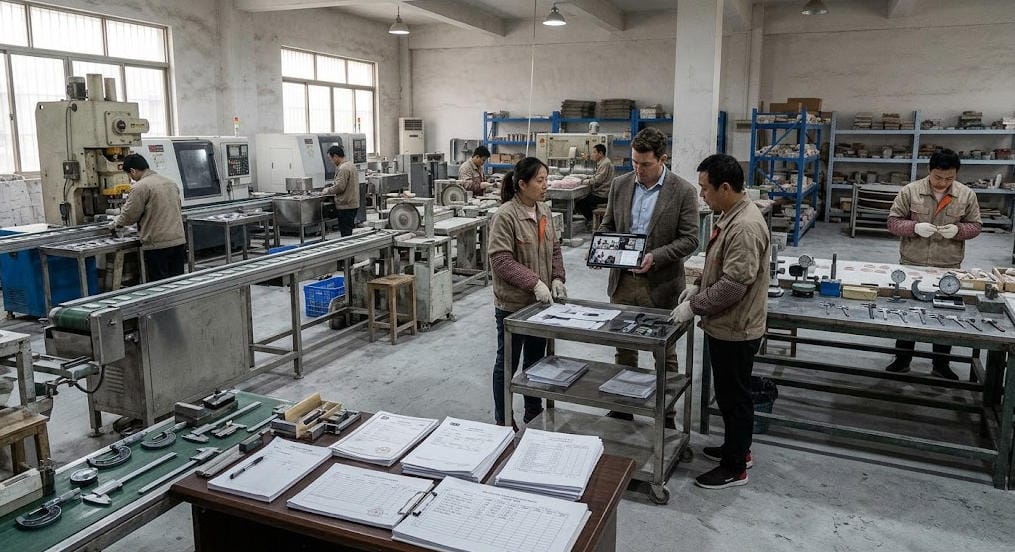
Documentation to Request for Compliance and Traceability
Before you commit to a gua sha wholesale order, ask for paperwork that matches the material. For a stainless steel order, a mill test certificate confirming the 316L composition, along with surface-contact material testing relevant to your destination market, gives you something concrete to hold the supplier to if a batch ever comes in off-spec. For a natural stone order, ask whether the material has undergone any treatment — dyeing, waxing, or fracture filling — and request identification documentation for higher-value batches, since independent testing bodies including GIA and SSEF exist to verify exactly this kind of claim on colored gemstone material.
You’re not being difficult by asking for this. You’re doing the same due diligence any buyer should do before a container leaves the dock, and a factory that hesitates to provide it is telling you something worth hearing before you pay a deposit.
Put a rough number on what this saves you. A single rejected shipment at customs over missing material documentation can cost you far more in storage fees, demurrage, and delayed resale than the small amount of time it takes to request a mill certificate or a gemological identification report upfront. This means the ten minutes you spend asking for paperwork before you place a gua sha wholesale order is one of the highest-return questions you’ll ask all year, whether you’re buying from a metal-parts supplier or a quartz guasha manufacturer.
Questions That Separate a Real Stainless Steel Gua Sha Manufacturer From a Trading Company
Ask to see the production floor, even over video call. A genuine metal-parts factory can show you the stamping line, the polishing stations, and the QC bench without needing days of advance notice, because that equipment is sitting there whether you visit or not. Ask what percentage of last month’s raw material became sellable product, and listen for a specific number rather than a vague reassurance. Ask how rework is handled when a batch comes back from QC — a supplier who can answer this in detail is running their own floor, not relaying answers from a subcontractor three steps removed from your order.
This matters more than it might seem at first glance. This means the difference between a five-day delay and a five-week delay on your next order often traces back to whether you asked these questions before signing, not after your shipment date came and went.
The Bottom Line When You Compare a Stainless Steel Gua Sha Manufacturer to Natural Stone
Here’s the honest summary. A supplier built around stainless steel isn’t faster because every single step of the process runs quicker — it’s faster because standardized raw material, higher automation, repeatable parameters, and a yield rate near 98% stack together into a production system with very little built-in loss. A stone gua sha manufacturer or jade gua sha manufacturer is running a fundamentally different kind of manufacturing logic, one where nature supplies the raw input and the factory’s real job is managing variation, not eliminating it.
Neither system is better in the abstract. What matters is whether the supplier you’re working with can explain, in specific numbers, why their price and lead time look the way they do. If a gua sha factory can walk you through their yield curve the way this disclosure just did, you’re looking at a partner worth building a long-term gua sha wholesale relationship with — regardless of which material sits on their production floor.