
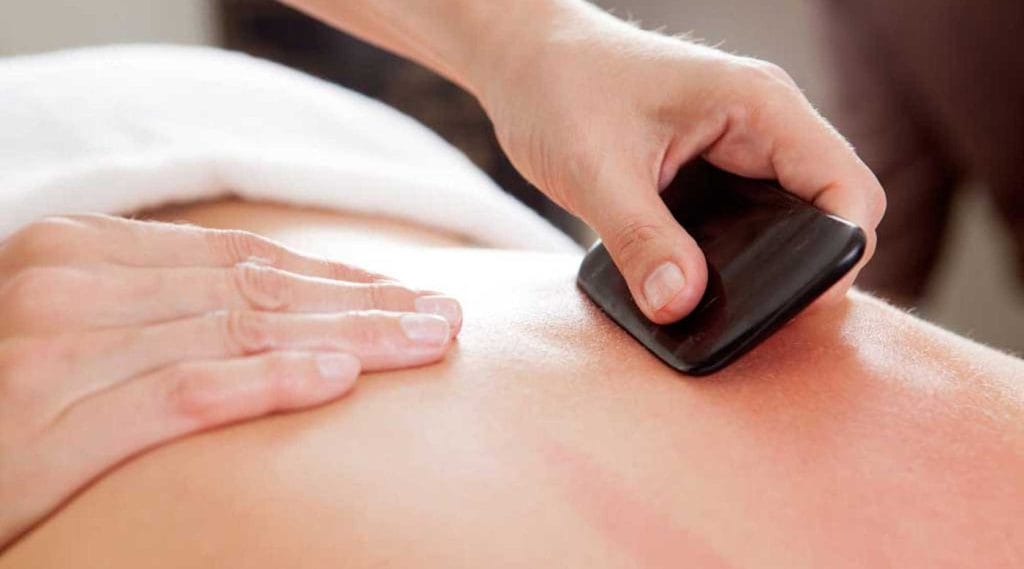
[News Brief – May 08, 2025] In recent years, gua sha has gained widespread popularity as a traditional Chinese wellness method, widely regarded for its ability to relieve fatigue and improve overall health. Once limited to East Asian regions, guasha is now gaining traction in Western countries, fueled by a growing global interest in traditional therapies.
However, medical professionals are raising red flags over a common and potentially harmful misconception among practitioners and enthusiasts alike—the belief that “the harder and more painful the scraping, the better the results.” Many assume that guasha must produce pronounced marks—known as “sha,” or petechiae, caused by the rupture of capillaries beneath the skin—to be effective. According to traditional Chinese medicine (TCM) experts, this assumption is not only incorrect but may also be detrimental to one’s health.
“Gua sha should be performed moderately,” say TCM practitioners. “The technique must be adjusted according to the individual’s condition and the severity of symptoms.” Overexertion, they warn, can result in more harm than benefit, especially for people with fragile constitutions.
Experts explain that gua sha works by stimulating meridians and acupoints on the body’s surface to promote circulation and restore organ balance. If the pressure is too intense, it may cause skin damage, muscle injury, blood vessel rupture, swelling, or even inflammation. Vulnerable groups such as the elderly, children, pregnant women, and those with weakened health are at particularly high risk of complications from overly aggressive scraping.
Numerous cases have been reported where individuals experienced large bruises, intense pain, fever, and fatigue after undergoing gua sha. These symptoms, according to TCM specialists, may be signs of an “exhaustion-like response”—a form of stress reaction triggered by excessive physical trauma during treatment.
In such cases, experts advise halting the guasha session immediately. Applying a cold compress or a calming ointment can help reduce inflammation, while severe symptoms warrant prompt medical attention to avoid infection or other complications.
“The essence of gua sha lies in harmonizing qi and blood—not in causing pain or bruising,” practitioners emphasize. They urge guasa users to first understand their body type and health condition, and to learn proper techniques before attempting self-treatment. Ideally, guasha should be performed at professional clinics by trained therapists. Furthermore, frequency matters—experts recommend no more than one to two sessions per week, allowing ample time for the body to recover.
As gua sha continues to spread across the globe, experts hope that education and awareness will keep pace with its popularity, ensuring that the ancient healing art is practiced safely and effective.