
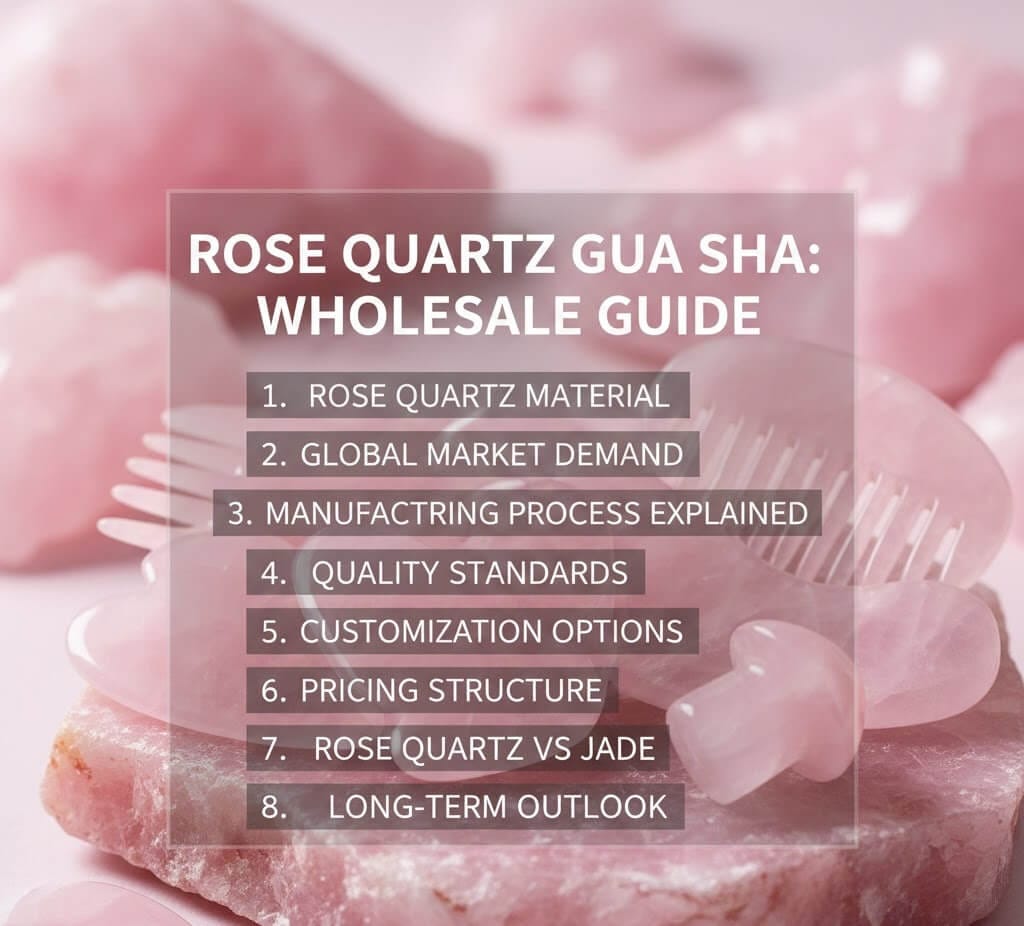
As the chief editor of guashafounder.com and a long-term practitioner in jade and gemstone OEM/ODM manufacturing, I have witnessed several cycles of product trends in the gua sha industry. From traditional nephrite jade tools used only in Chinese medicine clinics to today’s globally popular facial massage tools, few materials have shown the long-term commercial stability of rose quartz.
For brands, wholesalers, and importers, rose quartz gua sha is not just a “trendy wellness product.” It is a material with stable sourcing, predictable processing behavior, and strong consumer recognition. In this article, I will explain rose quartz gua sha wholesale manufacturing from a factory perspective, combining technical knowledge, market insights, and real production experience from Donoghua’s supply chain.
Understanding Rose Quartz as a Manufacturing Material
What Rose Quartz Really Is
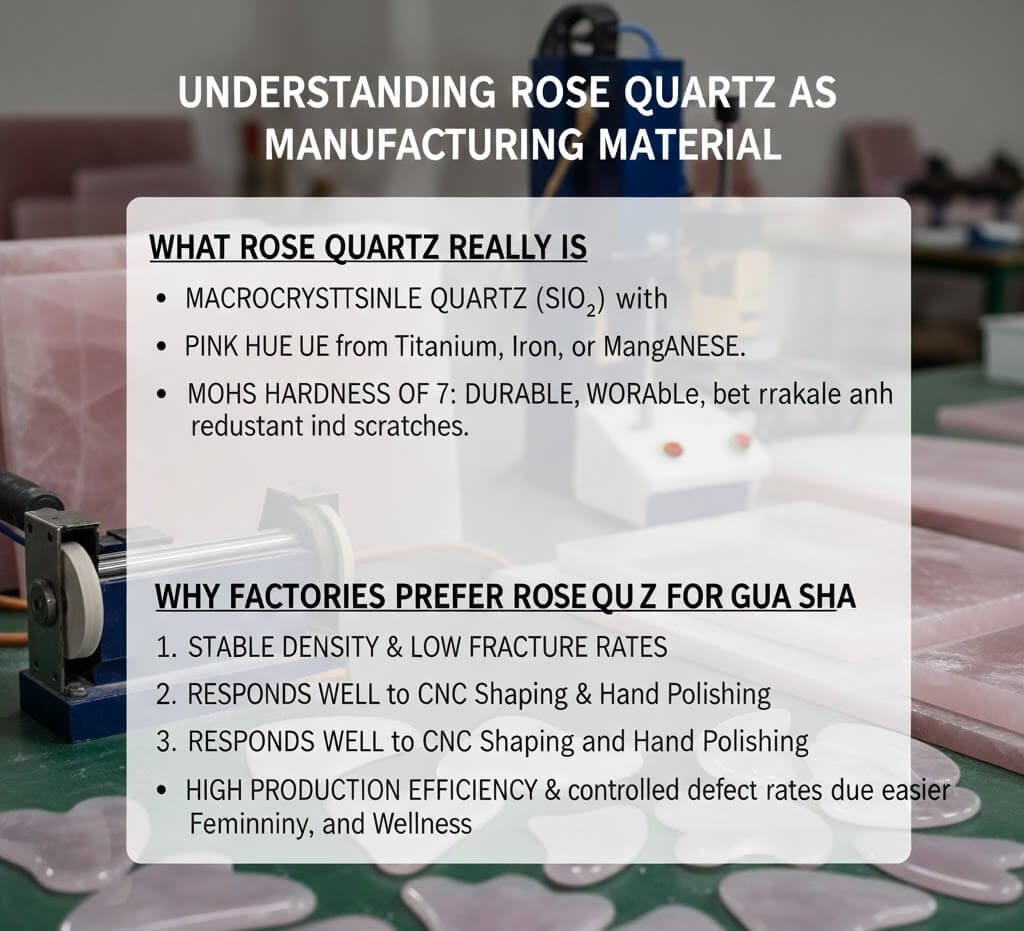
Rose quartz is a macrocrystalline variety of quartz, primarily composed of silicon dioxide (SiO₂). Its soft pink color comes from trace amounts of titanium, iron, or manganese within the crystal lattice. Unlike jadeite or nephrite, rose quartz has a relatively uniform internal structure, which makes it easier to process consistently at scale.
From a geological standpoint, rose quartz scores 7 on the Mohs hardness scale, meaning it is hard enough to resist everyday scratching but still workable with industrial diamond tooling. This balance is one of the key reasons factories favor it for gua sha tools.
Authoritative reference: https://en.wikipedia.org/wiki/Rose_quartz
Why Factories Prefer Rose Quartz for Gua Sha
From a manufacturing perspective, rose quartz offers three advantages. First, it has stable density and low internal fracture rates compared to many decorative stones. Second, it responds well to CNC shaping and hand polishing without excessive material loss. Third, its color tone is naturally associated with skincare, femininity, and emotional wellness in global consumer psychology.
Unlike jade, rose quartz does not require extremely slow cutting speeds to avoid internal stress fractures. This allows factories like ours to maintain higher production efficiency while keeping defect rates under control, which directly impacts wholesale pricing.
Global Market Demand for Rose Quartz Gua Sha
Consumer Recognition and Brand Storytelling
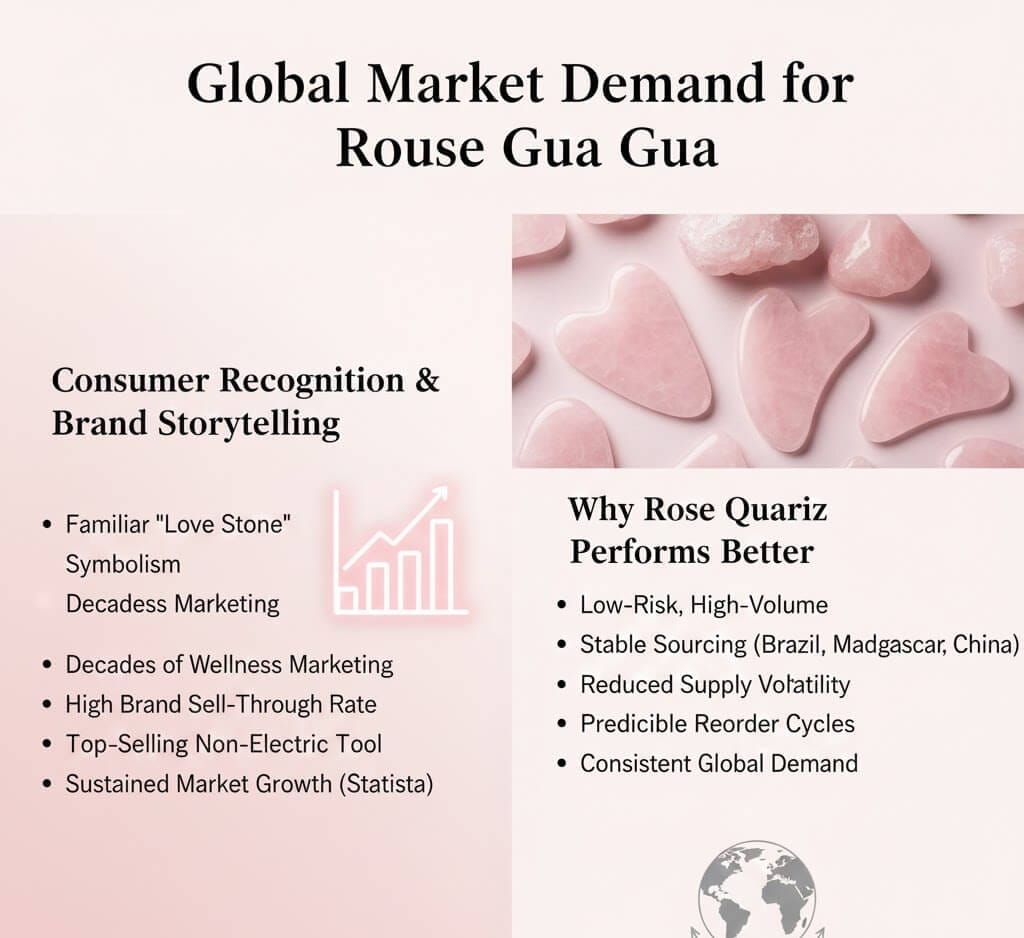
One of the most overlooked factors in wholesale manufacturing is consumer familiarity. Rose quartz has been widely marketed in the wellness and beauty space for decades, often associated with “love stone” symbolism and calming aesthetics. While manufacturers should avoid making medical claims, this cultural association helps brands sell the product without heavy consumer education costs.
According to global beauty tool trend reports, facial massage tools made from quartz and jade consistently rank among top-selling non-electric skincare accessories. Market analysis platforms such as Statista frequently highlight sustained growth in the personal wellness accessories segment.
Reference example: https://www.statista.com/markets/418/topic/474/beauty-personal-care/
Why Rose Quartz Performs Better Than Trend Stones
Every year, factories receive inquiries about new materials: obsidian, aventurine, amethyst, or even synthetic crystals. While these can work for short-term launches, rose quartz remains a low-risk, high-volume option for wholesalers. Its sourcing is relatively stable, with major deposits in Brazil, Madagascar, and parts of China, reducing supply volatility.
For wholesalers managing inventory risk, rose quartz gua sha tools provide predictable reorder cycles and consistent customer demand across regions including North America, Europe, and Southeast Asia.
Rose Quartz Gua Sha Manufacturing Process Explained
Raw Material Selection at Factory Level
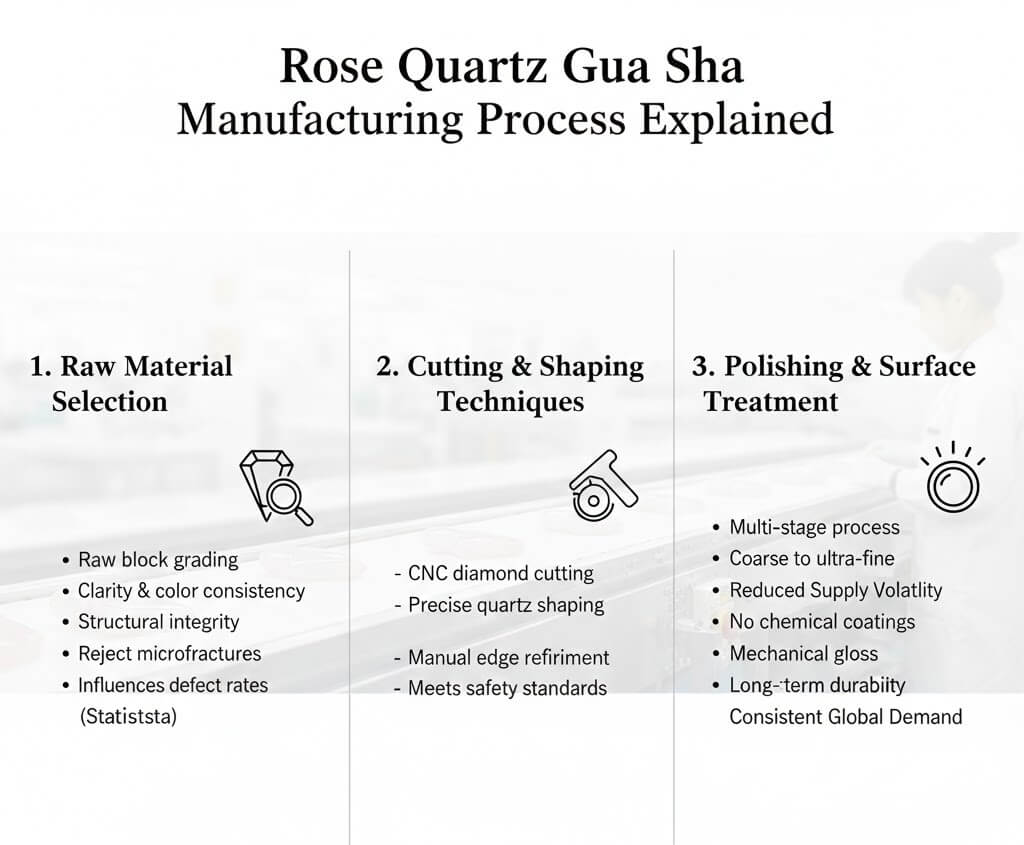
At Donoghua, raw rose quartz blocks are graded before any cutting begins. This grading focuses on internal clarity, color consistency, and absence of visible cracks. Unlike jewelry-grade stones, gua sha manufacturing prioritizes structural integrity over visual transparency.
Lower-grade stones with excessive inclusions are rejected early, not because they look unattractive, but because microfractures can cause breakage during polishing or later consumer use. This selection process directly influences wholesale defect rates.
Cutting and Shaping Techniques
The shaping stage typically uses CNC water-cooled diamond cutting machines for rough profiling. Rose quartz allows tighter tolerances than jade, which is why more intricate gua sha shapes—such as heart curves or serrated edges—are often made from quartz rather than nephrite.
After CNC shaping, each piece undergoes manual edge refinement. This step ensures that the tool feels smooth against the skin and meets international cosmetic accessory safety standards.
Polishing and Surface Treatment
Polishing rose quartz is both an art and a science. Over-polishing can cause surface heating, leading to discoloration, while under-polishing leaves micro-abrasions that reduce perceived quality. Factories usually apply a multi-stage polishing process, gradually moving from coarse to ultra-fine diamond compounds.
No chemical coatings are used in high-quality manufacturing. A properly polished rose quartz gua sha should maintain its gloss through mechanical polishing alone, ensuring long-term durability.
Quality Standards in Rose Quartz Gua Sha Wholesale
Physical Inspection and Tolerance Control
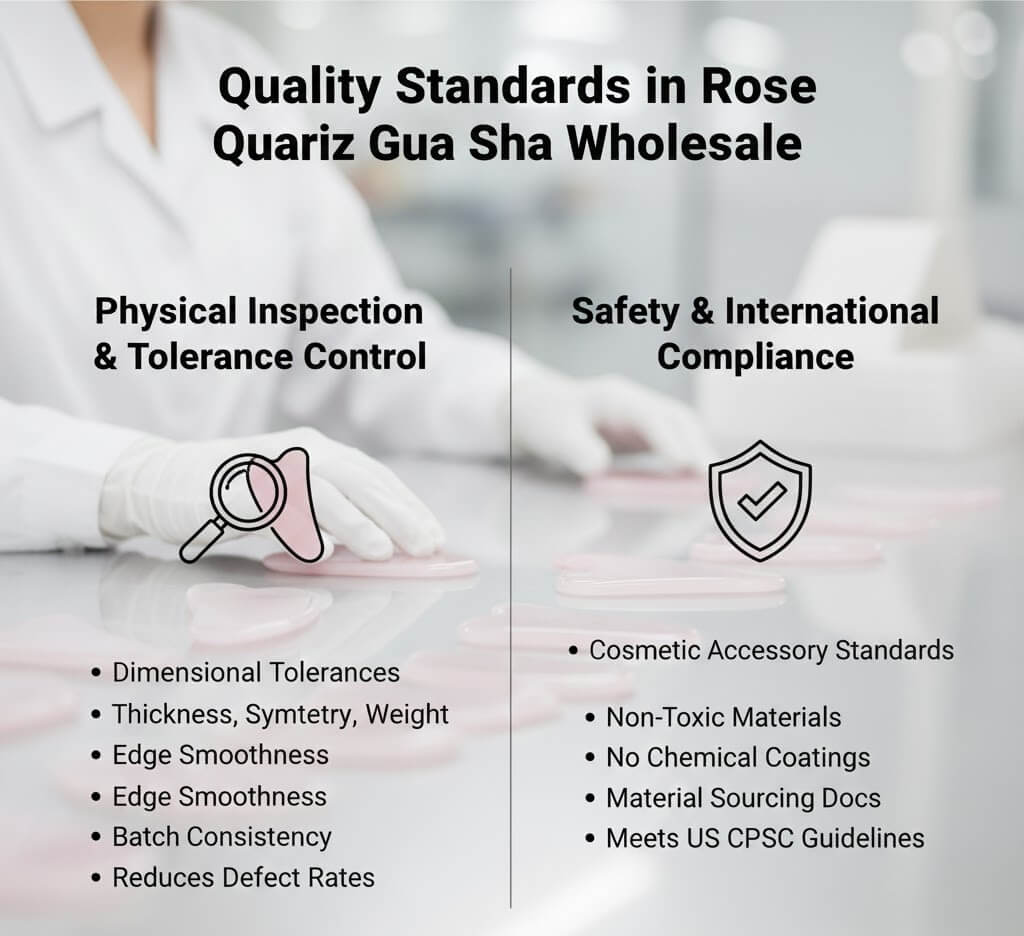
Wholesale buyers often underestimate how much quality variation exists between factories. At scale, even a 1 mm deviation in thickness can change how a gua sha tool feels in hand. Professional manufacturers enforce dimensional tolerances during final inspection to ensure batch consistency.
Each production batch should be sampled for edge smoothness, symmetry, and weight balance. These factors affect user experience and brand reputation more than color variation alone.
Safety and International Compliance
Although gua sha tools are not medical devices, many importing countries treat them as cosmetic accessories. This means materials must be non-toxic and free from surface treatments that could degrade over time. Quartz naturally meets these criteria when processed correctly.
For brands entering regulated markets, it is advisable to request factory documentation on material sourcing and polishing processes. This aligns with general consumer product safety frameworks such as those outlined by the U.S. Consumer Product Safety Commission: https://www.cpsc.gov/
Wholesale Customization Options for Brands
Shape, Thickness, and Ergonomic Design
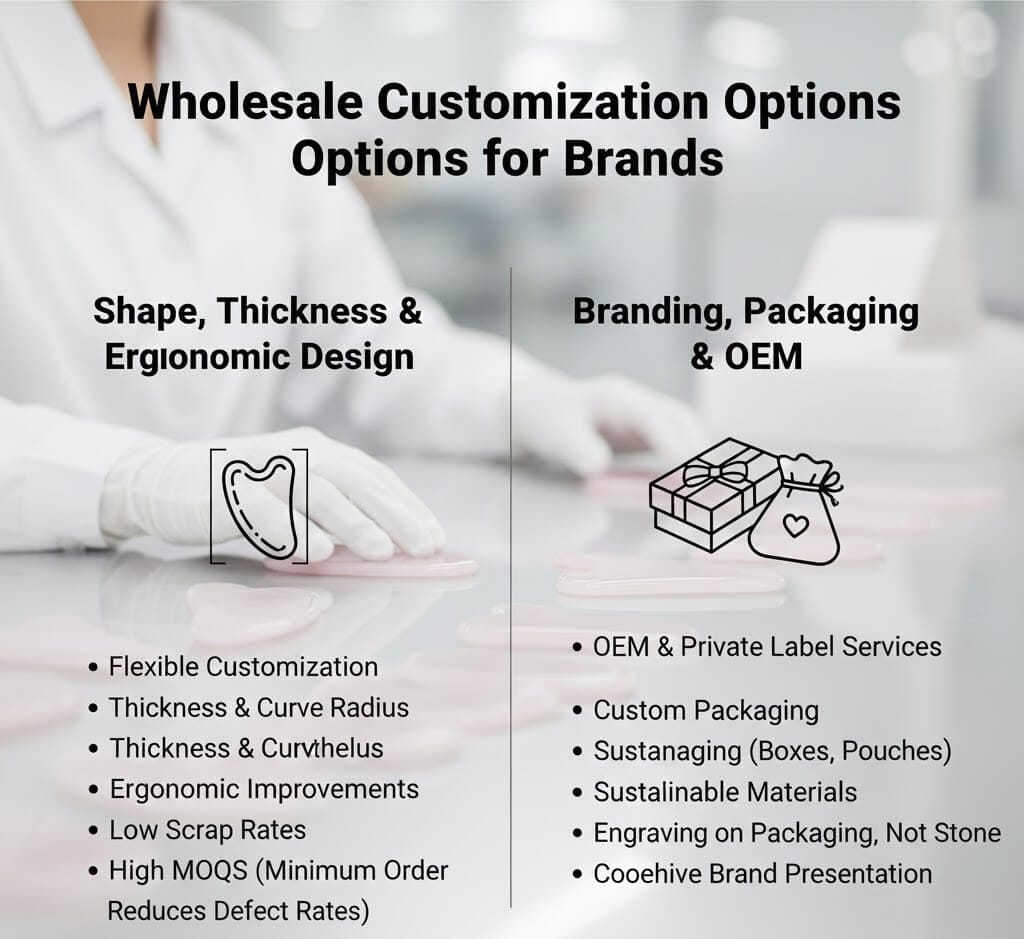
Rose quartz is particularly suitable for customization. Factories can adjust thickness, curve radius, and edge profile without dramatically increasing scrap rates. This flexibility allows brands to differentiate their products while maintaining reasonable minimum order quantities.
From my experience, subtle ergonomic improvements—rather than dramatic shape changes—deliver better long-term sales performance. Consumers value comfort and familiarity more than novelty.
Branding, Packaging, and OEM Considerations
While the stone itself cannot be engraved easily without weakening structure, branding usually appears on packaging. Factories offering OEM and private label services often collaborate with packaging suppliers to deliver cohesive brand presentation.
High-end brands tend to pair rose quartz gua sha tools with recyclable paper boxes or fabric pouches, reinforcing sustainability narratives that resonate with modern consumers.
Pricing Structure in Rose Quartz Gua Sha Wholesale
Factors That Influence Factory Pricing
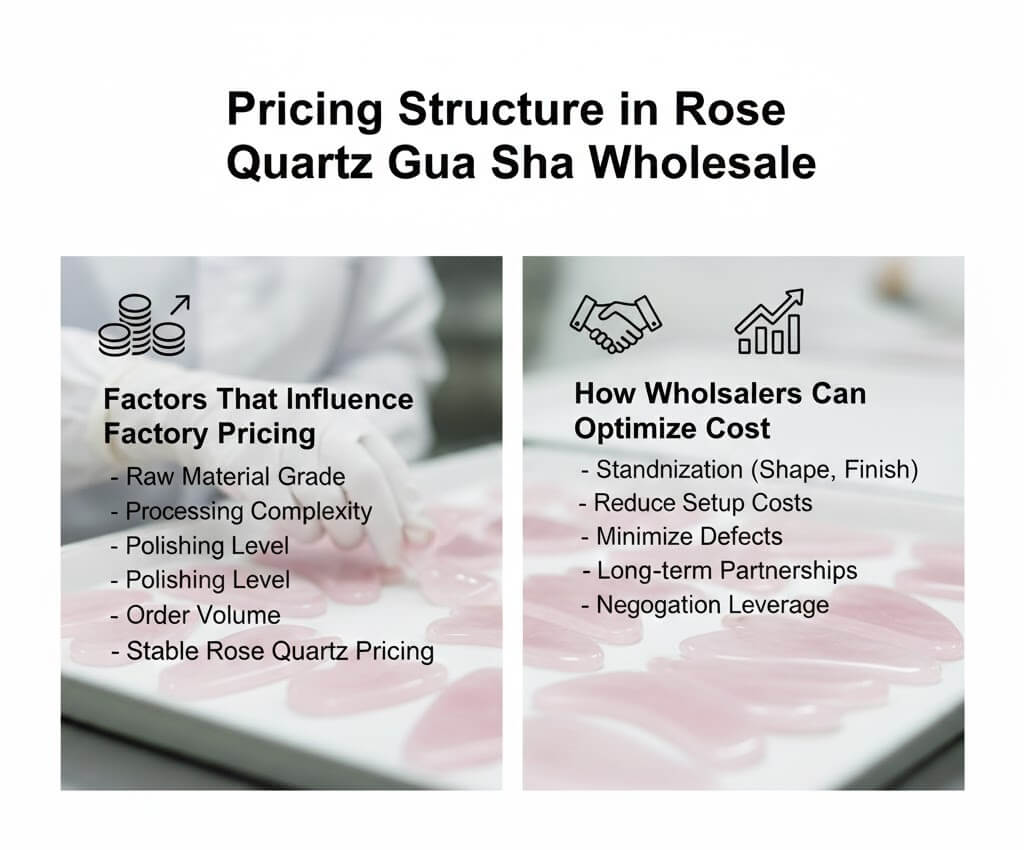
Wholesale pricing is influenced by raw material grade, processing complexity, polishing level, and order volume. Rose quartz pricing is more stable than jade, which is subject to speculative market swings.
Factories usually offer tiered pricing based on order size. Larger volumes reduce per-unit labor costs, particularly during polishing and inspection stages.
How Wholesalers Can Optimize Cost Without Sacrificing Quality
One common mistake wholesalers make is pushing for ultra-low prices at the expense of quality control. In rose quartz manufacturing, cost savings should focus on standardization, not material downgrading. Choosing a proven shape and finish reduces setup costs and minimizes defects.
Long-term partnerships with manufacturers yield better results than frequent factory switching. Stable collaboration improves quality consistency and negotiation leverage over time.
Rose Quartz vs Jade: A Factory Perspective
Manufacturing Differences
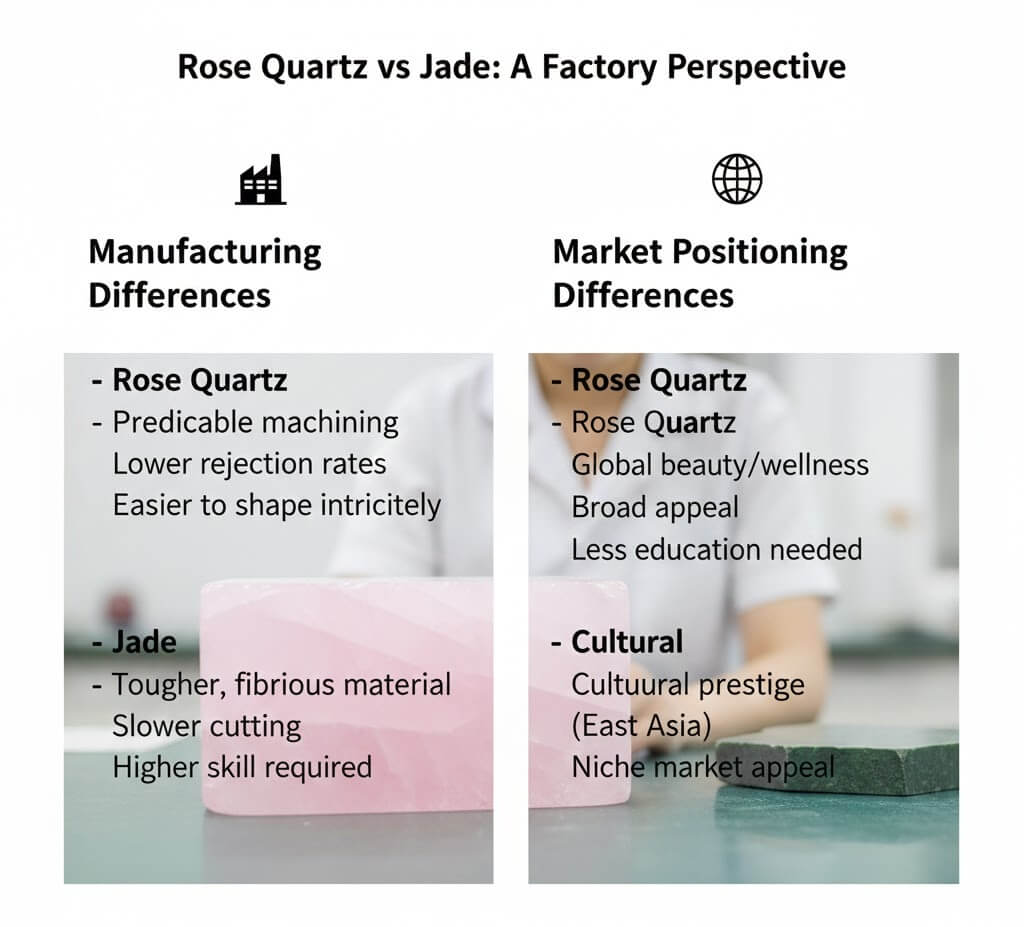
From a purely technical standpoint, jade is tougher and more fibrous, requiring slower cutting speeds and higher skill levels. Rose quartz, while still hard, behaves more predictably during machining. This translates into lower rejection rates for quartz-based products.
Market Positioning Differences
Jade often carries cultural prestige, especially in East Asian markets, while rose quartz excels in global beauty and wellness branding. For wholesalers targeting international consumers, rose quartz gua sha tools offer broader appeal with fewer educational barriers.
A general overview of gua sha history and material usage can be found here: https://en.wikipedia.org/wiki/Gua_sha
Long-Term Outlook for Rose Quartz Gua Sha Wholesale
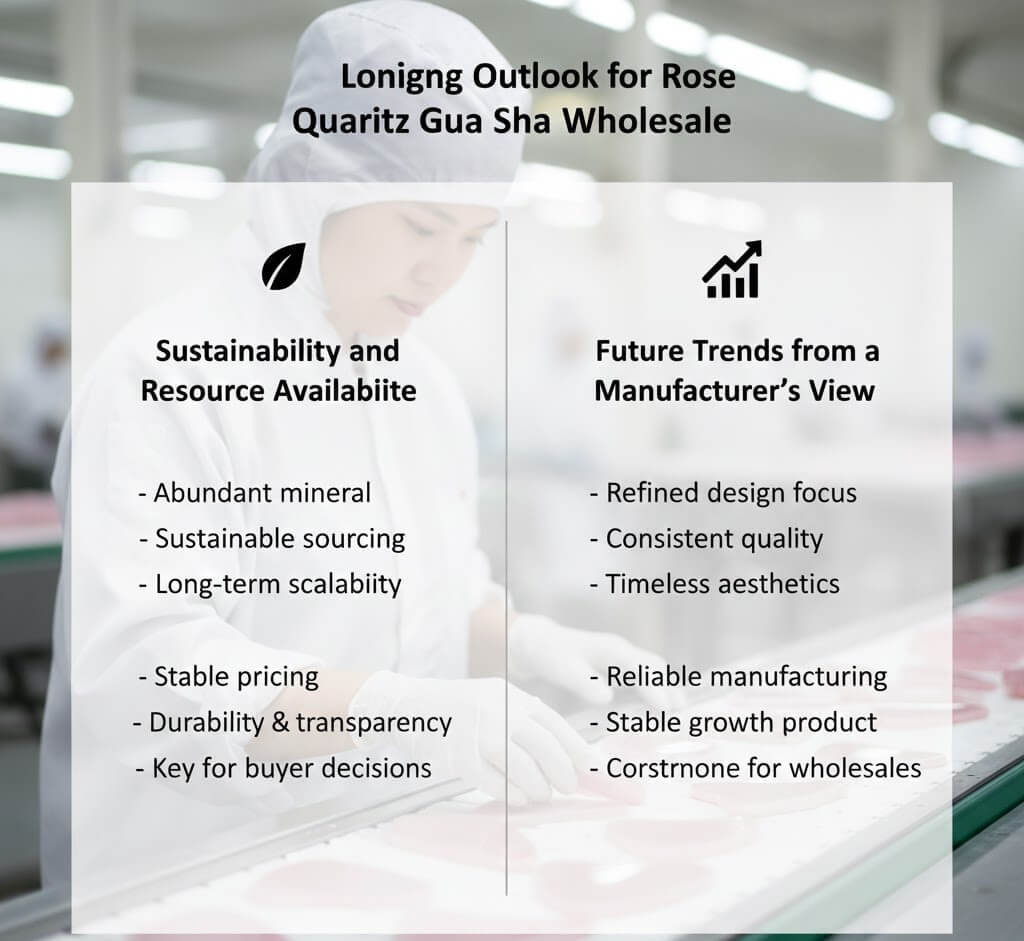
Sustainability and Resource Availability
Quartz is one of the most abundant minerals on Earth, making rose quartz a more sustainable option compared to rare gemstone materials. This abundance supports long-term wholesale scalability without extreme price volatility.
As sustainability becomes a stronger purchasing factor, transparent sourcing and durable materials will increasingly influence buyer decisions.
Future Trends from a Manufacturer’s View
Based on factory order data, demand is shifting toward refined design and consistent quality rather than novelty materials. Rose quartz aligns well with this trend, offering timeless aesthetics and reliable manufacturing performance.
From Donoghua’s perspective, rose quartz gua sha tools will remain a cornerstone product for wholesalers and brands seeking stable growth rather than short-lived trends.
Final Thoughts from a Gua Sha Factory Insider
Rose quartz gua sha wholesale manufacturing is not just about producing a pink stone tool. It is about understanding material science, consumer psychology, and industrial efficiency. Having worked across jade processing, gemstone sourcing, and global distribution, I can confidently say that rose quartz remains one of the most commercially balanced materials in the gua sha industry.
For wholesalers and brand owners, choosing the right manufacturing partner matters as much as choosing the material itself. With proper quality control, ethical sourcing, and thoughtful design, rose quartz gua sha products can support long-term brand credibility and sustainable business growth.