
In the global gua sha wholesale market, material choice has quietly become one of the biggest determinants of profit, risk, and long-term brand credibility. As the chief editor of Donoghua at guashafounder.com, and someone who has spent many years inside jade processing factories and downstream sales channels, I have seen countless buyers lose money not because of poor sales ability, but because of wrong material decisions at the sourcing stage.
Stainless steel gua sha tools are no longer a niche alternative to jade or natural stone. They are now a strategic product category for wholesalers, private-label brands, spas, and cross-border e-commerce sellers. However, stainless steel also brings hidden technical, manufacturing, and compliance risks that many buyers underestimate. This article will explain stainless steel gua sha wholesale in depth, with a clear focus on how to avoid losses by understanding materials, processes, pricing logic, and supply chain realities.
Understanding Gua Sha Wholesale From a Material Perspective
What “Gua Sha Wholesale” Really Means Today
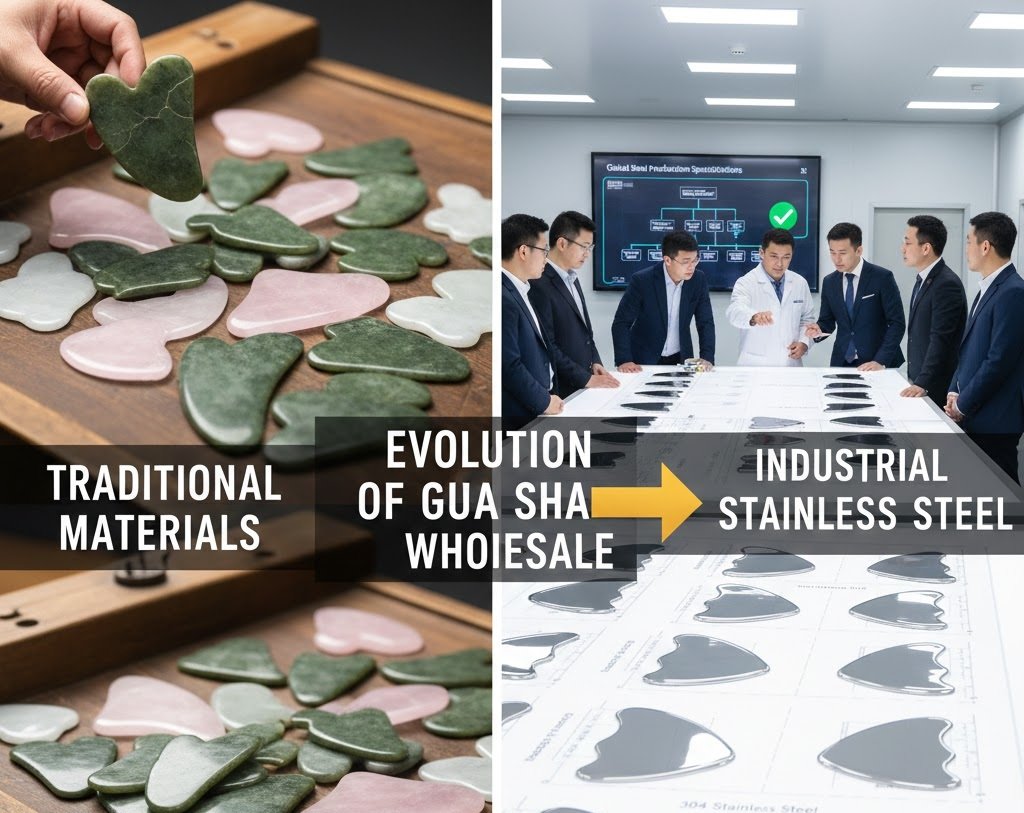
In traditional understanding, gua sha wholesale simply meant bulk purchasing of jade or stone tools at lower unit prices. Today, the term has expanded to include ODM manufacturing, private labeling, compliance testing, logistics planning, and lifecycle cost control. Stainless steel has entered this ecosystem because it addresses several pain points that jade-based products cannot.
From a wholesale perspective, stainless steel gua sha products offer higher consistency, lower breakage rates, and more predictable pricing. This changes how buyers calculate margins and risk exposure. Instead of worrying about natural stone cracks or color inconsistency, the focus shifts to metallurgy, finishing, and surface treatment.
Why Stainless Steel Is Replacing Traditional Materials
Natural jade has cultural and aesthetic value, but it also comes with high variability and supply uncertainty. Stainless steel, by contrast, is an industrial material with standardized grades and measurable performance indicators. This makes it especially attractive for large-scale gua sha wholesale orders.
According to the World Steel Association, stainless steel production follows globally recognized specifications, allowing buyers to control quality across batches more easily than with natural stone. This industrial standardization is one of the main reasons stainless steel gua sha tools are now widely used in professional skincare clinics and export markets.
Stainless Steel Grades and Their Impact on Wholesale Risk
Common Stainless Steel Grades Used in Gua Sha Tools
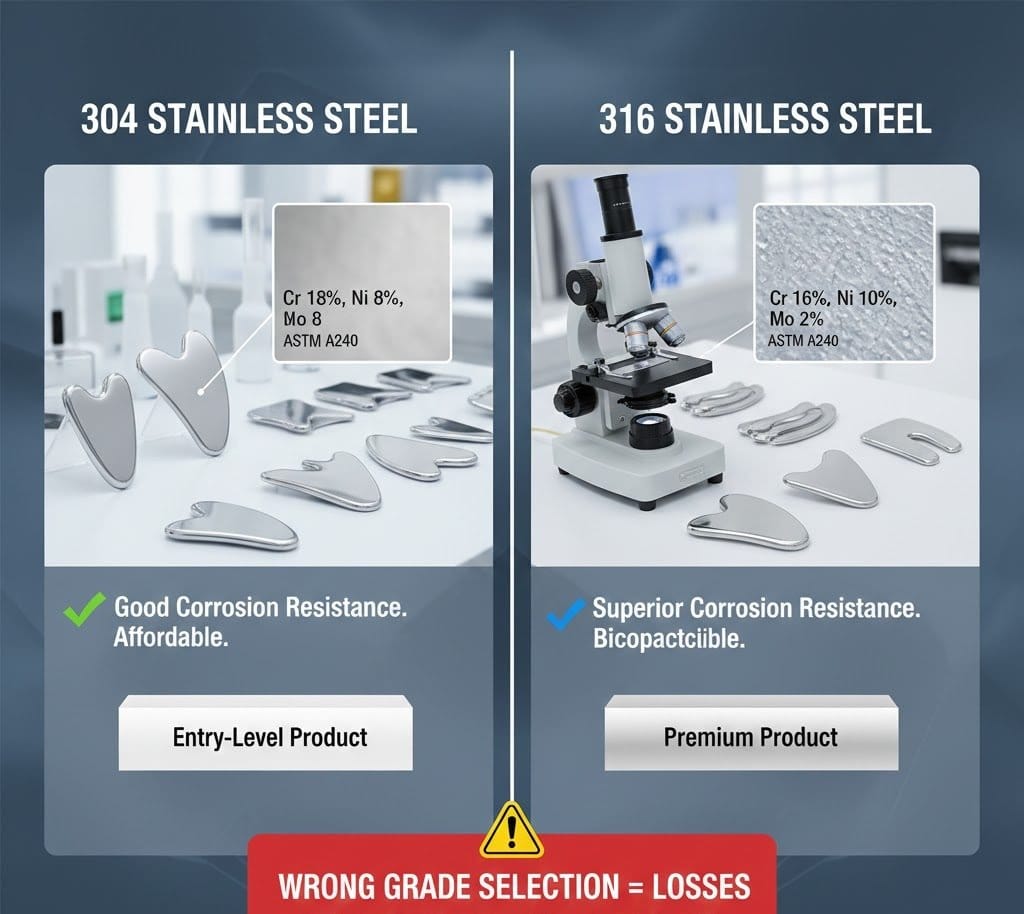
Not all stainless steel is the same, and misunderstanding this is one of the fastest ways to lose money in gua sha wholesale. The most commonly used grades in gua sha manufacturing are 304 and 316 stainless steel.
304 stainless steel offers good corrosion resistance and affordability, making it suitable for entry-level wholesale products. 316 stainless steel contains molybdenum, which significantly improves resistance to corrosion from sweat, oils, and skincare products. This difference directly affects product lifespan and customer satisfaction.
The ASTM International standards (https://www.astm.org) provide detailed chemical composition requirements for these grades, and professional buyers should always request material certificates referencing these standards.
How Wrong Grade Selection Causes Losses
Choosing a cheaper steel grade may reduce unit cost, but it can dramatically increase after-sales issues. Surface discoloration, micro-rusting, or allergic reactions can lead to returns, negative reviews, and even legal disputes in regulated markets.
In cross-border gua sha wholesale, especially in the EU and North America, stainless steel tools must meet safety and skin-contact requirements. The U.S. FDA’s guidelines on materials for skin-contact tools (https://www.fda.gov) clearly emphasize corrosion resistance and biocompatibility. Ignoring these factors may result in customs detention or forced product recalls.
Manufacturing Processes That Determine Wholesale Profitability
CNC Machining vs. Stamping vs. Casting
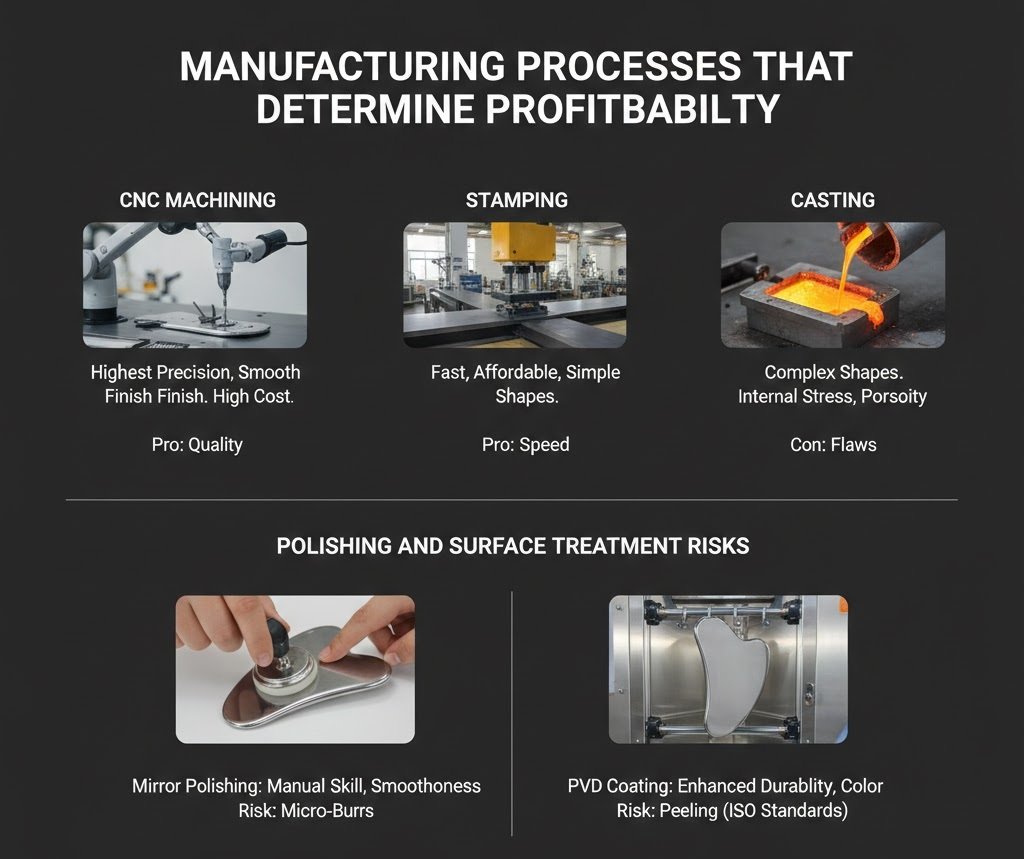
The manufacturing process used for stainless steel gua sha tools directly impacts cost, finish quality, and defect rates. CNC machining offers the highest precision and smoothness but comes with higher upfront costs. Stamping is faster and cheaper but limits design complexity. Casting allows creative shapes but introduces internal stress and surface porosity risks.
In gua sha wholesale, buyers often focus only on unit price without understanding how process choice affects long-term losses. For example, poorly cast tools may look acceptable initially but develop surface flaws after repeated use.
Polishing and Surface Treatment Risks
Polishing is not just about appearance; it affects skin safety and perceived value. Mirror polishing requires multiple manual steps and skilled labor. Inexperienced factories may skip stages, leading to micro-burrs that can irritate skin.
Electropolishing and PVD coating are advanced options sometimes used to enhance corrosion resistance or color. However, these processes must be tightly controlled. According to ISO surface finishing standards (https://www.iso.org), inconsistent coating thickness can lead to peeling, which is catastrophic for brand trust in gua sha wholesale markets.
Cost Structure Analysis in Stainless Steel Gua Sha Wholesale
Breaking Down the True Cost Components
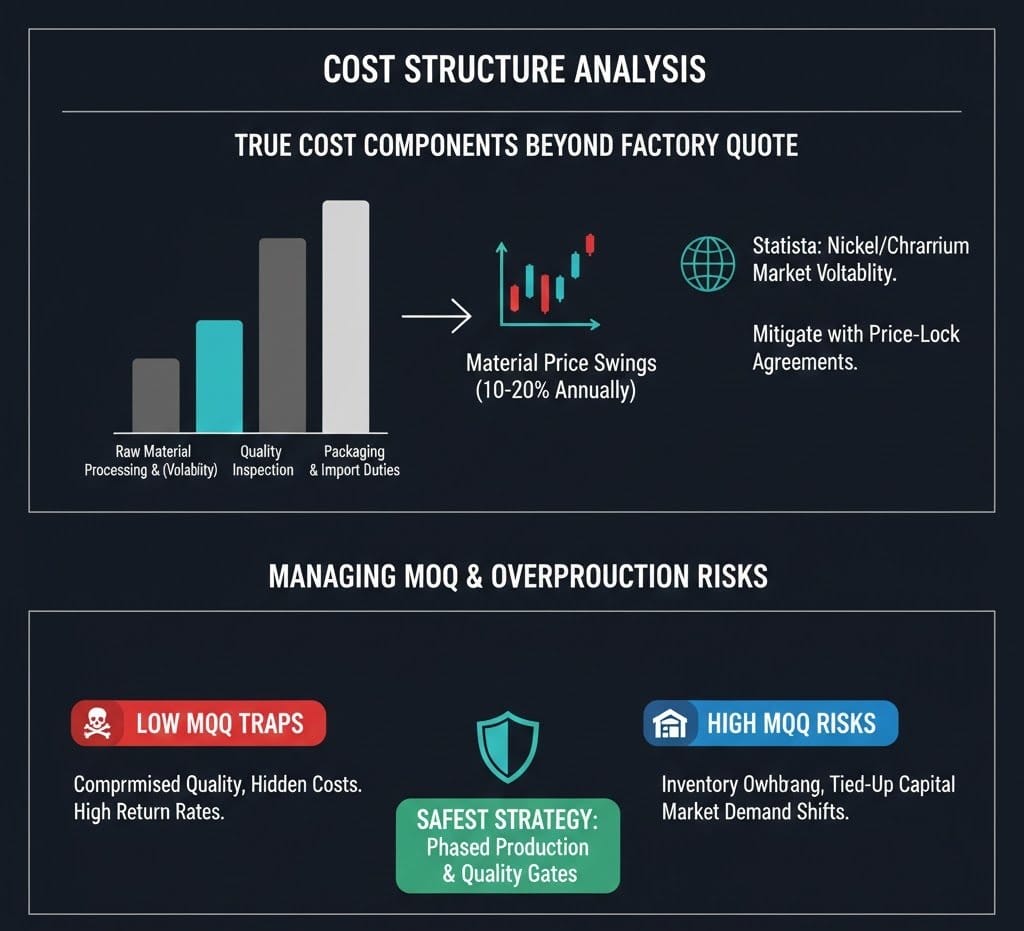
Many buyers calculate costs based only on factory quotations, but true gua sha wholesale cost includes material price volatility, processing yield, quality inspection, packaging, and logistics. Stainless steel prices fluctuate based on nickel and chromium markets, which can significantly impact margins if contracts are not properly structured.
Statista’s global stainless steel market reports (https://www.statista.com) show that raw material price swings of 10–20% within a year are not uncommon. Without price-lock agreements, wholesalers may find their profitability eroded mid-cycle.
MOQ Traps and Overproduction Risks
Low minimum order quantities may look attractive, but they often hide compromises in material sourcing or quality control. Conversely, high MOQs can trap wholesalers into inventory overhang if market demand shifts.
In my experience, the safest gua sha wholesale strategy balances MOQ with phased production. This allows quality validation before committing to full volume, significantly reducing financial exposure.
Quality Control: The Core of Loss Prevention
Inspection Standards for Stainless Steel Gua Sha
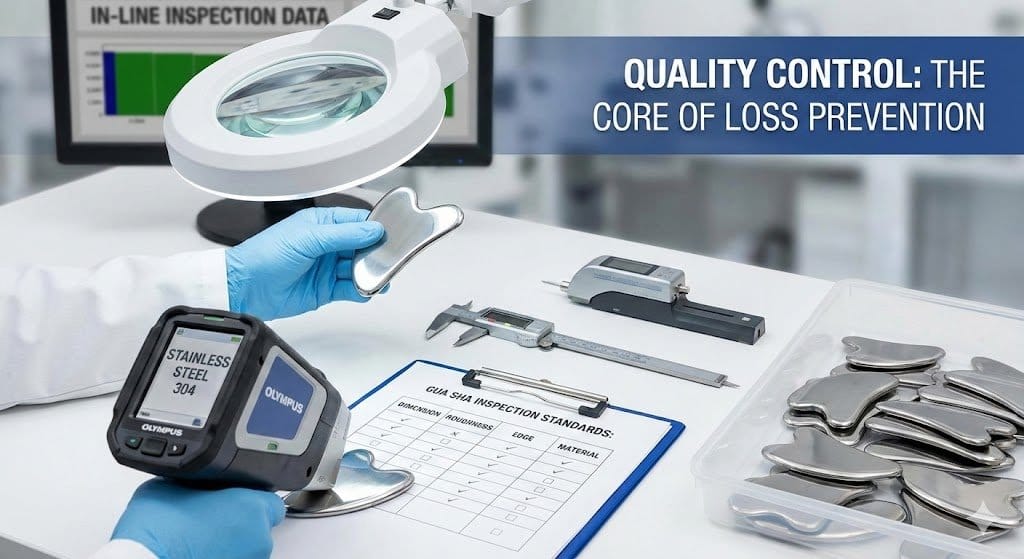
Professional gua sha wholesale buyers should define inspection criteria clearly. These include dimensional tolerance, surface roughness, edge smoothness, and material composition verification. Random visual inspection is not enough.
Third-party inspection agencies often use handheld XRF analyzers to verify stainless steel grades. This technology, explained by companies like Olympus IMS (https://www.olympus-ims.com), can quickly detect alloy composition and prevent grade substitution fraud.
Why Sample Approval Is Not Enough
Many losses occur because buyers rely solely on pre-production samples. Mass production introduces variability due to tool wear, operator fatigue, or process shortcuts.
A robust gua sha wholesale program includes in-line inspections and pre-shipment audits. These steps may add short-term cost but dramatically reduce downstream losses from customer complaints and returns.
Compliance, Certification, and Market Access Risks

Regulatory Requirements in Major Markets
Different markets impose different requirements on stainless steel gua sha tools. In the EU, REACH regulations restrict certain heavy metals. In the U.S., consumer product safety standards apply to skin-contact tools.
Failing compliance testing can result in shipment rejection. According to European Commission guidance on REACH (https://ec.europa.eu), non-compliant products may be destroyed at the importer’s expense, representing a total loss.
Documentation as a Wholesale Asset
Certificates of analysis, material test reports, and compliance declarations are not paperwork burdens; they are assets. They enable smoother customs clearance and strengthen buyer confidence in B2B transactions.
Experienced gua sha wholesale brands treat documentation as part of product value, not an afterthought.
Branding and Positioning in Stainless Steel Gua Sha Wholesale
Perceived Value vs. Material Cost
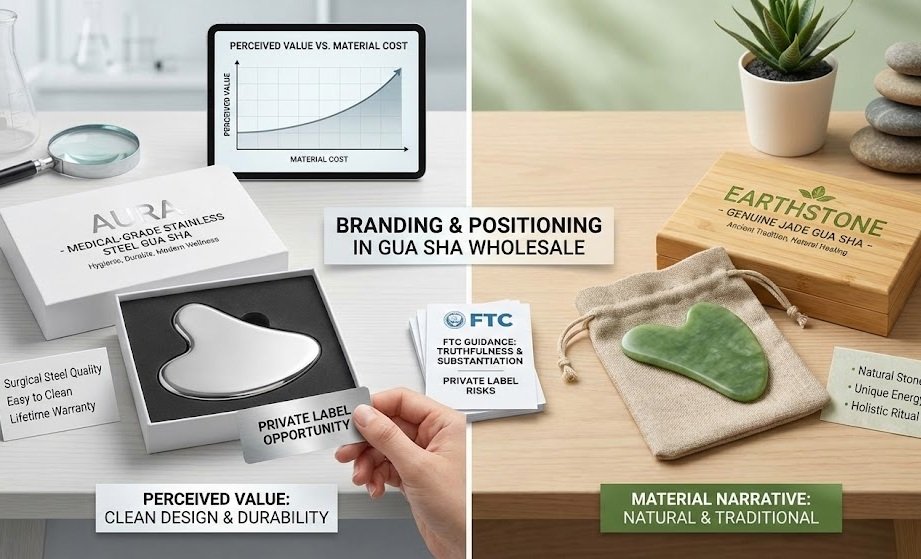
Stainless steel gua sha tools often have lower raw material costs than premium jade, but their perceived value can be higher when positioned correctly. Clean design, medical-grade messaging, and durability claims resonate strongly with modern consumers.
This perception gap allows wholesalers to maintain healthy margins if branding aligns with material strengths rather than imitating jade narratives.
Private Label Risks and Opportunities
Private labeling is a major driver in gua sha wholesale, but it also introduces risk if branding promises exceed material performance. Claims such as “medical-grade” or “surgical steel” must be technically accurate.
Mislabeling not only damages reputation but may violate advertising regulations. The Federal Trade Commission’s guidance on product claims (https://www.ftc.gov) emphasizes truthfulness and substantiation.
Logistics and Packaging Considerations
Preventing Transit Damage and Returns
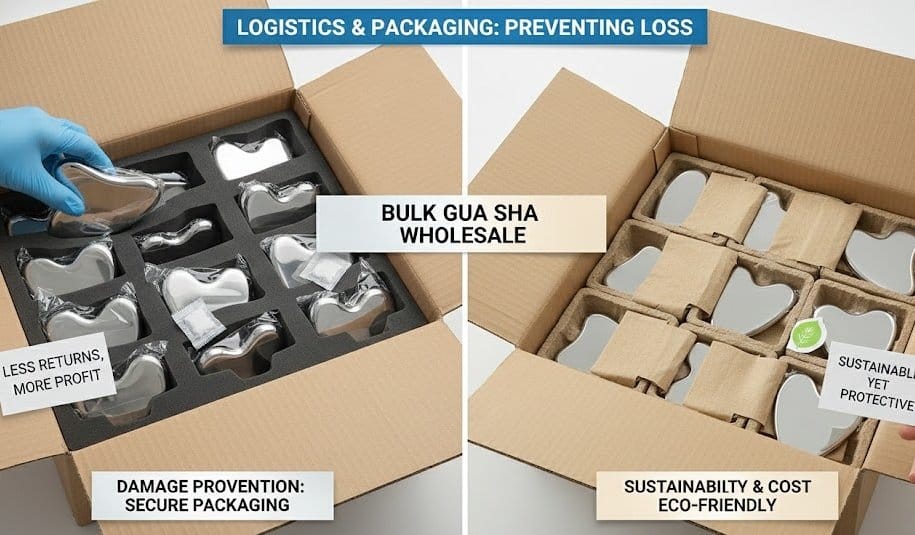
Although stainless steel is more durable than jade, improper packaging can still cause scratches or deformation. Foam density, individual wrapping, and moisture control all matter.
Bulk gua sha wholesale shipments often fail due to overlooked packaging details, leading to cosmetic defects that make products unsellable as premium items.
Sustainability and Cost Balance
Eco-friendly packaging is increasingly demanded, but it must not compromise protection. Balancing sustainability with damage prevention is now part of loss control strategy in wholesale operations.
Long-Term Strategy: Building a Loss-Resistant Supply Chain

Supplier Relationships Over Spot Buying
Spot purchasing may seem cheaper, but it increases variability and risk. Long-term supplier partnerships enable process optimization, stable pricing, and faster problem resolution.
In stainless steel gua sha wholesale, consistent suppliers also accumulate product-specific experience, reducing defect rates over time.
Data-Driven Decision Making
Tracking return rates, defect causes, and customer feedback provides actionable insights. Over time, this data helps refine specifications and eliminate loss sources.
According to Harvard Business Review analyses on supply chain analytics (https://hbr.org), data-driven procurement significantly improves profitability and resilience.
Conclusion: Mastery Is the Best Loss Prevention
Stainless steel gua sha wholesale is not a shortcut to easy profits, but it is a powerful opportunity for those who understand its technical and commercial realities. Losses usually come not from bad luck, but from gaps in knowledge about materials, processes, compliance, and positioning.
By treating stainless steel gua sha tools as engineered products rather than simple accessories, wholesalers can reduce risk, protect margins, and build sustainable brands. At Donoghua, we believe that informed decision-making is the most reliable form of cost control. In a competitive global market, mastery of details is what ultimately separates profitable gua sha wholesale operations from those that quietly disappear.