
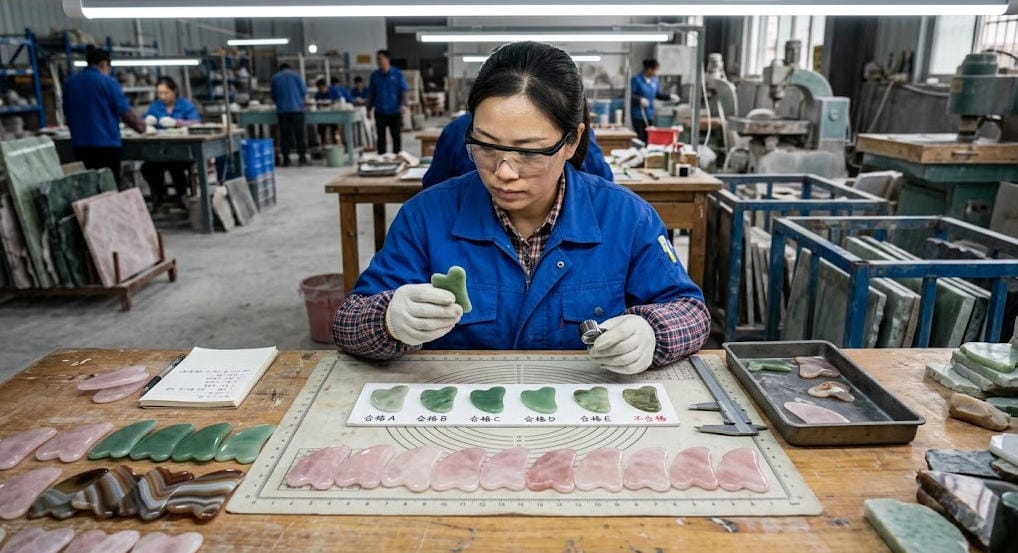
If you’ve ever opened a gua sha wholesale shipment and found the first carton noticeably lighter than the last one, you’re looking at the most common reason bulk buyers file color complaints against a stone tool factory. A gua sha manufacturer cannot promise that every piece cut from a raw block of amethyst or agate will look identical — natural mineral color simply doesn’t work that way. What a factory can do, and what actually protects your order, is build a written gua sha color sample before cutting starts, the same way international inspection standards like ISO 2859 define an acceptable defect rate before a shipment is judged pass or fail. Applied to color instead of scratches or chips, this turns a subjective argument into a measurable checkpoint. That distinction is the difference between one clean gua sha wholesale order and a container full of returns. This single checkpoint is what separates a predictable gua sha wholesale program from a recurring one-off gamble.
The Real Risk Behind Color Variation in Gua Sha Wholesale
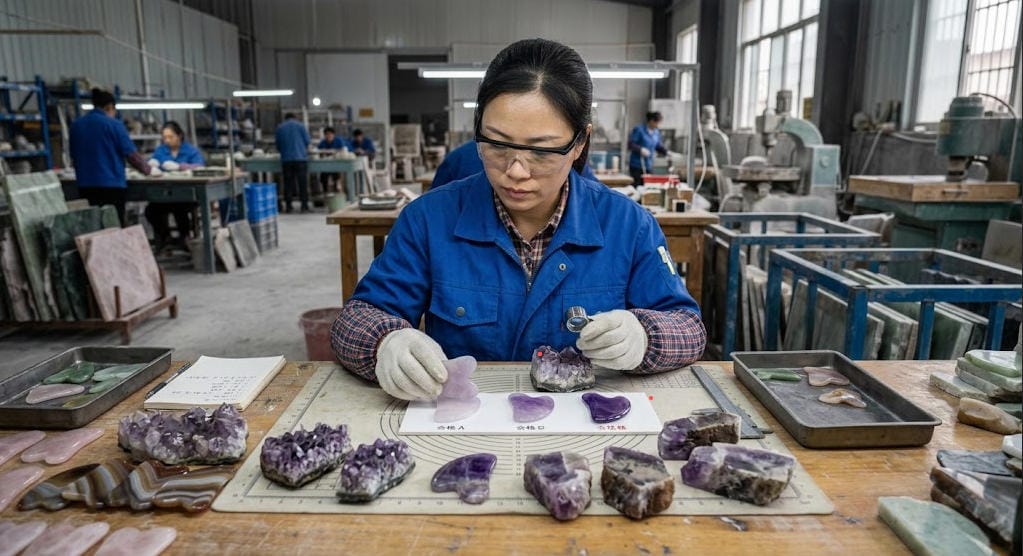
Where the Complaint Actually Starts
Picture your own inbox after a big gua sha wholesale shipment lands: a photo from your customer, three tools laid side by side, and a message asking why they don’t match. This is rarely about a single ugly piece. It’s almost always about a batch that drifted — pale pieces at the start of packing, darker pieces near the end, and nobody catching it until the tools were already on a shelf. Nature doesn’t distribute color evenly through a mineral vein, and pretending otherwise sets your expectations up to fail before the order even leaves the workshop. So what actually causes this drift, and why does it seem to hit some gua sha wholesale orders harder than others? The answer usually traces back to what happened weeks earlier, at the raw material stage, long before anyone picked up a grinding wheel.
Why “It’s Natural Stone” Doesn’t Satisfy a Gua Sha Wholesale Buyer
Telling a retail customer “it’s natural, some variation is normal” might be true, but it’s not useful to you as a buyer trying to keep your online listings consistent. Gemological references from the Gemological Institute of America break gemstone color into three measurable parts — hue, tone, and saturation — precisely because “it just looks different” isn’t a standard anyone can act on (GIA). A gua sha manufacturer who understands this breaks your color requirement into the same measurable terms instead of leaving it as a feeling. This matters because vague standards create vague accountability: if nobody defined “light purple” in writing, nobody can be held to it later. You end up absorbing the cost of a mismatch that neither side can prove was ever wrong. This means you can push back on any factory that describes color control only in adjectives — ask them how they actually measure it, and watch how they answer. A factory with a real system will point straight at a physical reference standard, not a paragraph of description. That reference standard is the subject of the rest of this article, and it is the single biggest lever you have over color consistency in bulk gua sha production.
What a Color-Only Return Actually Costs You
A single mismatched carton rarely ships back for a refund; more often it sits in your warehouse as unsellable inventory, or gets discounted below your margin line just to move it. Add the customer service time spent explaining “natural variation” to someone who ordered from a photo, and the real cost is rarely just the unit price of the stone. For buyers running private label programs, a repeated pattern of color complaints erodes something harder to price: the retailer relationships you built to get shelf space in the first place. Is that a risk worth carrying when the fix costs less than the freight on the order it would protect? A written color standard, agreed before production, moves that expense from unpredictable and recurring to small and one-time. This is the operational reality behind a large share of gua sha wholesale returns that have nothing to do with breakage or shipping damage. This means you can treat color risk the same way you treat any other line item in your landed cost — plan for it once, instead of absorbing it every quarter.
Raw Material Selection: The First Checkpoint in Gua Sha Production
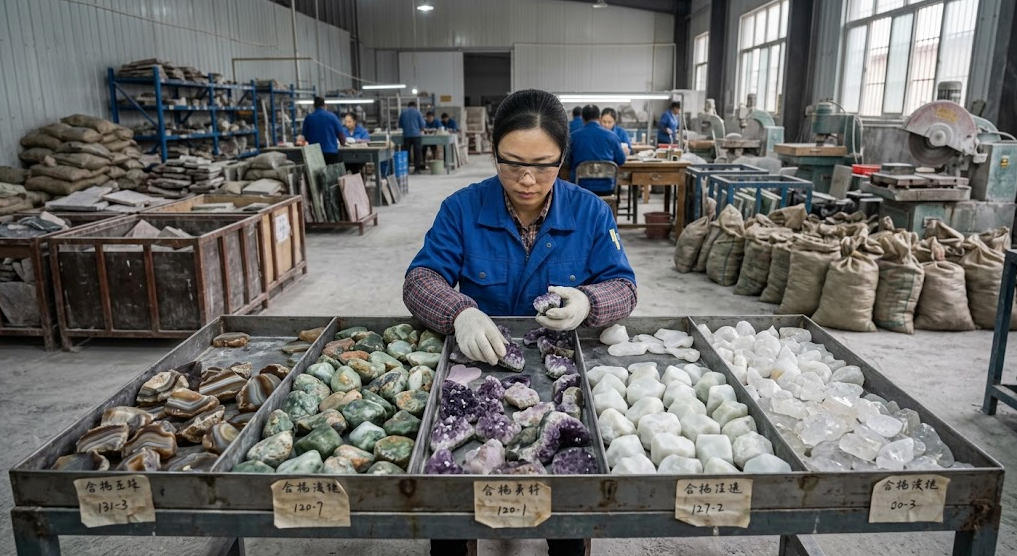
Stable-Color Stones vs. High-Variation Stones
Not every stone carries the same color risk, and a gua sha manufacturer who tells you otherwise either hasn’t sourced enough material or isn’t being straight with you. White jade and clear or white quartz tend to hold a narrow, predictable color range once a batch comes from the same vein and gets basic sorting at the yard. You can reasonably expect a tight, consistent look across a production run of these materials without needing an elaborate reference system, even at full gua sha wholesale volume. Amethyst, agate, green jade, and patterned stones behave very differently, which is exactly where most color complaints in the gua sha wholesale trade originate. Their color, banding, transparency, and internal inclusions can shift noticeably even within a single rough block, let alone across the multiple blocks needed to fill a gua sha wholesale order of any real size. Trace elements are the reason: research from the Swiss Gemmological Institute SSEF has traced jade’s color range back to specific elements like chromium, which is exactly why two green stones from the same mine can still look nothing alike (SSEF). This means you can expect a stable material like white quartz to need less oversight, while a high-variation material needs the color-control system covered later in this article applied from day one.
Why Sourcing Decisions Shape Every Gua Sha Wholesale Order Before Cutting Begins
Color control does not start when a grinder touches the stone — it starts at the yard, when raw blocks get pulled and matched to your order. A factory that buys rough material batch by batch and tags it by source can trace a color problem back to its origin; a factory that buys whatever is cheapest that week cannot. This distinction rarely shows up on a quotation sheet, but it shows up in your gua sha wholesale shipment three months later. For color-sensitive stones such as amethyst, the natural banding described by geological references comes from iron content and radiation exposure during crystal formation, a process no factory can control after the fact (Geology.com). What a manufacturer can control is which blocks get pulled and how consistently they’re grouped before they ever reach a cutting wheel. Ask your supplier a direct question here: do they select raw material by batch for color-sensitive gua sha production, or do they treat every stone the same regardless of type? The answer tells you more about your future defect rate than any sample piece they mail you upfront. So before a single reference sample gets discussed, make sure your factory’s sourcing habits match the level of color risk your material actually carries.
None of this replaces the need for a written standard — it just determines how hard that standard has to work. A stable material and disciplined sourcing get you most of the way to consistency on their own; a high-variation material without a signed gua sha color sample gets you a dispute instead. The next section covers exactly what that standard looks like for any serious gua sha wholesale program.
The Gua Sha Color Sample System: Turning a Vague Request Into a Written Standard
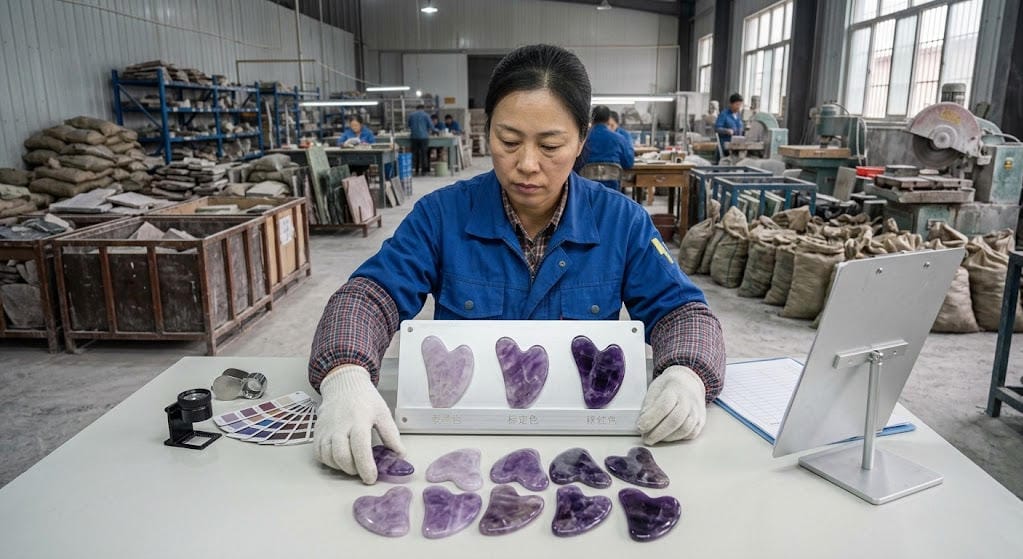
What a Three-Piece Color Reference Set Actually Looks Like
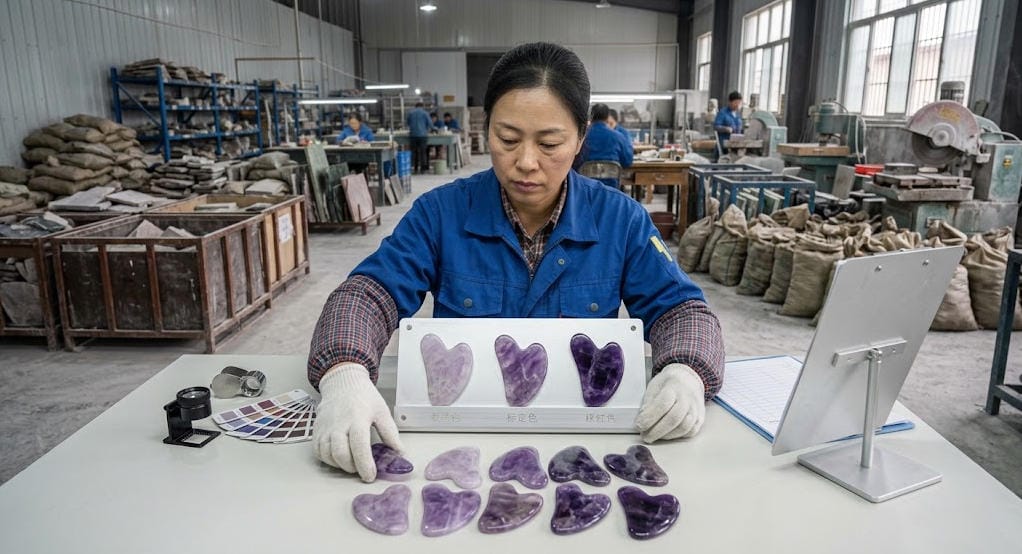
A proper gua sha color sample isn’t one piece — it’s three. Before a large gua sha wholesale order goes into gua sha production, a reliable factory sits down with the buyer and physically selects a lightest-acceptable piece, a standard target piece, and a darkest-acceptable piece from real material, not from a catalog photo. These three pieces become the boundary lines for the entire order: anything lighter than the pale sample or darker than the deep sample gets pulled before it reaches packaging. Everyone on the factory floor — the person sorting rough stone, the person running the grinder, and the person doing final inspection — checks against the same three objects instead of guessing at what “light purple” was supposed to mean. You get to define that range yourself, in person or over a video call, before you commit to a production quantity. This means you can walk into your next gua sha wholesale negotiation asking specifically for a three-piece reference set, rather than accepting a verbal promise that colors will be consistent.
Why Photos Fail as a Gua Sha Wholesale Color Standard
A photo feels like proof, but it’s one of the least reliable ways to lock down color, and it’s worth understanding why before you rely on one. Camera white balance, studio lighting, screen calibration, and even basic photo editing all shift how a stone’s hue reads on screen — the same amethyst can look distinctly bluish-purple in one photo and reddish-purple in another, with nothing about the actual stone having changed. GIA’s colored stone grading work exists in large part because verbal and visual color description varies so much between individual viewers, which is why gemologists standardize hue, tone, and saturation under controlled lighting rather than trusting a snapshot (GIA). If a lab needs controlled conditions to describe color reliably, why would a phone photo taken on a factory floor be treated as a binding standard for your gua sha wholesale order, particularly when one photo might represent thousands of finished pieces? A physical sample sidesteps all of this because it is the actual color, viewed in actual light, compared directly against the actual product — no screen in between to distort it.
How This Protects Your Gua Sha Wholesale Order From Shifting Standards Mid-Production
Disputes usually aren’t about bad faith on either side — they’re about two people arguing from two different mental pictures of what “acceptable” looks like. Without a written reference, a buyer’s idea of acceptable can quietly shift after seeing a particularly nice sample, while a factory’s idea of acceptable stays anchored to what they’ve always shipped. A signed gua sha color sample freezes that definition on day one, so a disagreement three weeks into production gets resolved by holding the product next to the sample, not by re-litigating a text message from a month earlier. This is the same logic behind quality standards like ISO 2859, which fixes an acceptable defect rate before inspection starts so nobody can move the goalposts once a shipment is already packed (ISO). This means you can walk away from your production run with a documented, referenceable standard instead of a verbal understanding that both sides remember slightly differently, especially once an order scales into multiple gua sha wholesale containers. Keep that sample set on file for every reorder, too — it’s the fastest way to hold a repeat gua sha wholesale order to the same standard a year later, long after the original conversation is forgotten.
Sorting and Batch Control During Gua Sha Production for Gua Sha Wholesale Orders
Why Random Mixing Creates Problems for Gua Sha Wholesale Buyers
Once raw material with natural color variation reaches the workshop, the next checkpoint is sorting — deciding which pieces of rough stone go into which production batch. A factory running loose, undisciplined gua sha production will grab whatever block is closest to the cutting wheel, mixing pale and deep-toned pieces into the same run without tracking which is which, across a gua sha wholesale floor of any real size. That approach might average out fine on paper, but it tends to fail in the worst possible way for a brand: not as scattered, minor differences between individual pieces, but as an obvious shift between one section of the shipment and the next. Imagine unboxing a gua sha wholesale order where the first 100 units look noticeably paler than the next 100 — that’s not a subtle natural variation a customer will forgive, it’s a visible break that reads as inconsistent stock photography or a quality slip. Sorting by the color reference range before cutting even begins is what prevents this specific failure mode, and it costs nothing extra beyond a bit of floor discipline.
Batch Consistency vs. Piece-by-Piece Perfection
It’s worth being direct about what sorting can and cannot promise. No factory can guarantee that two pieces of amethyst, agate, or patterned stone sitting side by side will look absolutely identical — that’s not how natural mineral formation works, and any gua sha manufacturer who claims otherwise is setting you up for disappointment down the line. What sorting delivers instead is protection against a batch-level jump: keeping every unit within your agreed color range so no section of your order visibly diverges from another. For a private label buyer running a gua sha wholesale program, this distinction actually matters more than piece-perfect matching, because retail customers rarely compare two units side by side — they compare what’s on the shelf against the marketing photo, and a consistent batch supports that comparison far better than a batch with hidden pale-and-dark clusters. So which failure would actually hurt your brand more: one customer noticing their two stones aren’t perfectly twinned, or a wave of complaints because half your shipment looks different from the other half? Framing the goal this way keeps your quality conversation with any gua sha wholesale factory realistic, instead of chasing a standard that natural stone was never going to meet. This kind of batch discipline works best when it’s checked, not assumed — which is exactly what final inspection before shipment is for, covered next.
Final Gua Sha QC: What Gets Checked Before Your Gua Sha Wholesale Order Ships
Comparing Finished Goods Against the Golden Sample
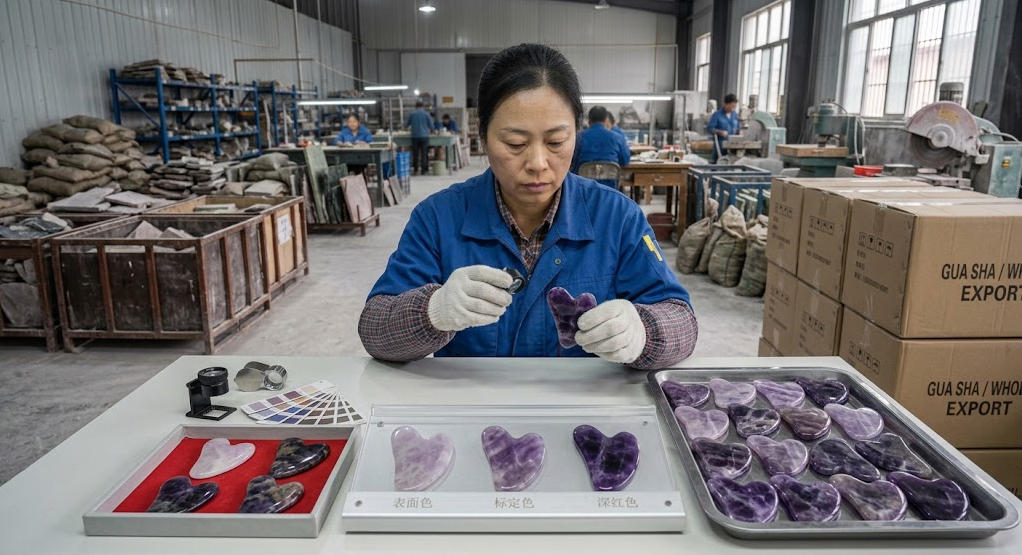
The last checkpoint before your order leaves the factory is final inspection, and this is where the earlier reference sample earns its keep. A disciplined gua sha qc process doesn’t ask an inspector to judge color from memory or general impression — it puts the finished product directly next to the golden sample and the gua sha color sample agreed at the start of the order. The question at this stage isn’t whether a piece looks nice, it’s narrower and more useful: does this piece fall inside the range already signed off by both sides? That narrower question is exactly what makes a gua sha qc process fast and repeatable across a large gua sha wholesale shipment, because it removes personal taste from the decision entirely. An inspector running gua sha qc doesn’t need years of gemology training to compare a stone against three physical references; they need a clear standard and the discipline to apply it consistently, unit after unit, carton after carton. This is the same logic behind acceptance sampling standards like ISO 2859, which define a fixed threshold before inspection starts so the pass/fail line doesn’t move partway through a lot (ISO).
What Happens to Pieces That Fall Outside Range
Finding an outlier at this stage isn’t a failure of the system — it’s the system working exactly as intended, catching a problem before it becomes your problem. Pieces that fall outside the confirmed range get pulled and set aside during packing rather than getting mixed in with compliant stock, because a single obviously mismatched piece buried in an otherwise good gua sha wholesale carton can trigger a complaint that colors a customer’s view of the entire shipment. This is worth asking your gua sha qc contact directly: what happens to rejected pieces, and are they tracked separately or simply reworked into a lower-tier batch without disclosure? A transparent gua sha manufacturer will have a clear answer, usually involving a secondary use for off-standard stone rather than quietly slipping it into your order. This means you can request a rejection count as part of your gua sha wholesale shipping documentation, turning what used to be an invisible step into something you can actually verify before the container leaves port. Final gua sha qc against a real reference is one of the more cost-effective checkpoints in this entire process for any gua sha wholesale buyer, because catching one out-of-range piece here is far cheaper than handling the same piece as a customer return three months later. None of this changes based on which stone you ordered — but how tightly you need to run this checkpoint absolutely does, which brings us to the material-by-material breakdown below.
Which Materials Need the Most Color Control
Low-Risk Stones for Gua Sha Wholesale Buyers: White Jade and Clear or White Quartz
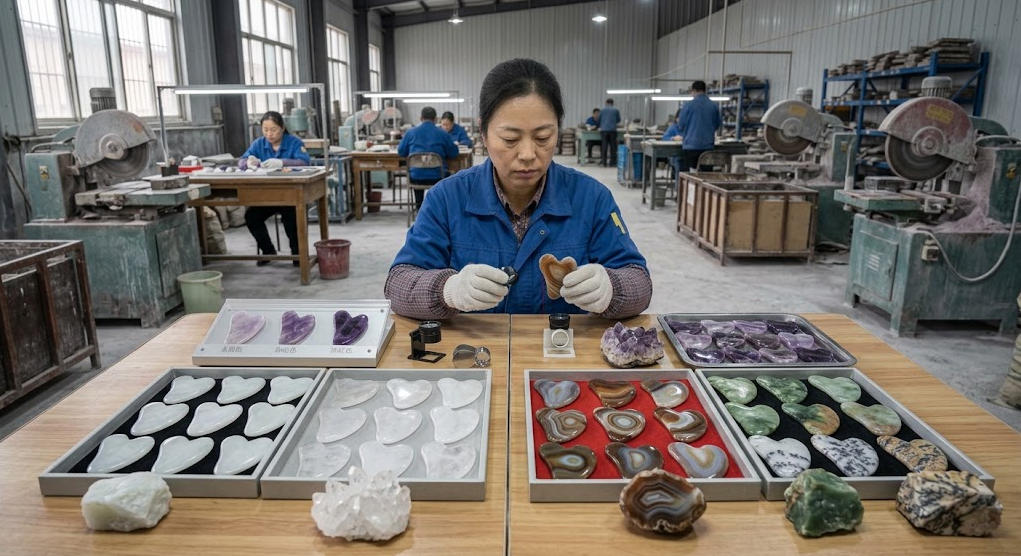
Some materials simply ask less of the system described above, and it’s worth knowing which ones before you assume every gua sha wholesale order needs the full three-piece reference treatment. White jade and clear or white quartz tend to form with a narrower natural color band, so basic batch sorting and a same-source purchasing habit at the raw material stage usually deliver a consistent-looking run without a heavy reference process layered on top. That doesn’t mean zero variation — natural stone always carries some — but the range is narrow enough that most buyers never notice it outside a side-by-side comparison under bright light. If your product line leans on these more stable materials, you can reasonably expect your gua sha manufacturer to hold consistency with lighter gua sha qc oversight, and you can redirect your quality-control attention toward dimensions, polish, and edge finishing instead. This holds true across most gua sha wholesale programs built primarily on these materials.
High-Variation Stones in Gua Sha Wholesale: Amethyst, Agate, Green Jade, and Patterned Stone
The calculus changes completely for amethyst, agate, green jade, and any patterned or banded stone, where color, translucency, and internal texture can shift block to block and even within a single piece of rough. Jade’s color range in particular comes down to trace element chemistry — chromium content pushes toward vivid green, while other elements shift the stone toward lavender or brown tones, according to research published by the Swiss Gemmological Institute SSEF (SSEF). Amethyst’s purple intensity depends on iron content combined with natural background radiation during crystal formation, a combination that varies enough between deposits that even stones from the same general region rarely match perfectly (Geology.com). For these materials, skipping the gua sha color sample isn’t a shortcut — it’s a decision to accept a much higher chance of dispute on your next gua sha wholesale order, and it puts extra pressure on your final gua sha qc stage to catch what should have been prevented earlier. A gua sha manufacturer can’t rewrite the chemistry that created these stones, but sourcing discipline, sorting, and a signed reference sample together bring the visible result within a range you actually agreed to. Knowing which category your product falls into before you write a purchase order saves both sides time — and tells you exactly how much reference-sample work your gua sha production run actually needs upfront.
What This Means for Your Next Gua Sha Wholesale Order
None of this requires you to become a gemologist before placing an order — it requires asking a handful of specific questions before you sign a purchase agreement. Ask whether your supplier sources raw material by batch for color-sensitive stones, whether they’ll build a three-piece gua sha color sample with you before production starts, how their gua sha qc team checks finished goods against that sample, and what happens to pieces that fall outside range. A gua sha manufacturer with a real system will answer all four questions specifically, usually pulling up examples from a previous order rather than describing the process in the abstract. One that answers with reassurance instead of process is telling you something too — just not what you want to hear before committing to container-sized gua sha wholesale volume.
You can apply this framework regardless of which factory you’re working with, and regardless of whether your current gua sha production run uses white jade, amethyst, agate, or any patterned stone. The cost of setting up a proper color reference sample is small relative to the order it protects, and the time it takes is measured in days at the front of a project, not weeks of correspondence after a shipment already landed. If your last gua sha wholesale order ended in a color dispute, the fix usually isn’t switching suppliers again — it’s putting this specific checkpoint in place before the next purchase order goes out. Bring these four questions to your next gua sha wholesale conversation, and you’ll know within minutes whether you’re dealing with a factory that actually manages color, or one that’s hoping you won’t ask.
At Donghua, this is the checkpoint we build into every color-sensitive order before cutting starts — not because it’s an extra service, but because it’s the only version of “consistent” that actually holds up once a container reaches your warehouse.
Faqs About Gua Sha Manufacturer Control Color
1. Can a gua sha manufacturer guarantee zero color variation on a wholesale order?
No, and you should be skeptical of any supplier who claims otherwise. Natural stones like amethyst, agate, and green jade form with built-in color variation, so a gua sha manufacturer can only control the range of that variation, not eliminate it. What you can reasonably ask for is a signed gua sha color sample that defines the lightest, standard, and darkest acceptable tones before production starts. That written boundary — not a verbal promise — is what actually protects your gua sha wholesale order from ending up with mismatched batches.
2. What exactly is a gua sha color sample, and do I need one for every order?
A gua sha color sample is a physical three-piece reference set — lightest, standard, and darkest acceptable tones — used to judge every piece in production. You need one mainly for high-variation materials like amethyst, agate, or patterned stone; stable materials like white jade or clear quartz usually need less oversight. If your gua sha wholesale order mixes several stone types, request a separate sample for each color-sensitive material rather than one generic reference.
3. How does gua sha QC actually check for color problems before shipping?
A proper gua sha qc process compares finished pieces directly against the golden sample and color reference set, not against memory or a photo. Inspectors ask one narrow question: does this piece fall inside the already-agreed range? Pieces outside that range get pulled and set aside during packing instead of mixed into the shipment. This turns color acceptance into a repeatable check rather than a judgment call, which is the same logic behind acceptance-sampling standards used across manufacturing.
4. Why can’t I just send a photo to define the color I want?
Photos are unreliable because camera white balance, lighting, and screen calibration all distort how a stone’s hue reads on-screen — the same amethyst can look bluish in one shot and reddish in another. For a gua sha wholesale order involving thousands of pieces, a screen-based reference simply won’t hold up on the factory floor. A physical sample removes that distortion entirely, since it’s the actual stone compared under actual light against the actual product.
5. Which gua sha materials carry the highest color-variation risk?
Amethyst, agate, green jade, and patterned or banded stones carry the highest risk, since their color comes from trace elements and natural formation conditions that vary block to block. White jade and clear or white quartz are comparatively stable and need lighter oversight. If your gua sha production run includes any high-variation material, budget time for a color reference sample — skipping it is the single most common cause of disputes on a gua sha wholesale order.